
Ranked Shortlist: Magnesium Sulphate Formats for Crops
Short answer. The ranked order for fruit, vegetable, field and cash crops is: first, magnesium sulphate heptahydrate (Epsom salt) in powder or crystal grade; second, magnesium sulphate monohydrate in powder or crystal grade; third, Kieserite granular, the monohydrate mineral grade; fourth, magnesium sulphate anhydrous powder. All four supply magnesium and sulfur together, all are described by the manufacturer as completely water-soluble with no residue, and all are positioned as suitable for every soil type. The order therefore follows application-route coverage, nutrient mass per tonne and physical handling, not soil selection.
Magnesium sulphate fertilizer is a dual-nutrient input: magnesium drives chlorophyll formation, and sulfur supports protein and enzyme function. For a grower in the evaluation stage, the practical question is not whether to use magnesium sulphate but which physical format fits the sprayer, the drip line and the spreader already on the farm, and which one can be documented, blended and reordered consistently across a season. This shortlist answers that question format by format, with an explicit inclusion rationale for each entry and the outcomes the manufacturer associates with its magnesium sulphate applications.
Two limits apply to everything below. The outcome statements — chlorosis correction, photosynthesis, flower bud formation, fruit set and enlargement, sugar content, colour and shelf-life — come from the manufacturer's application guidance for its magnesium sulphate fertilizers, not from independent comparative field trials of the four formats, which were not supplied. The ranking itself is an editorial decision built on documented characteristics, application fit and available production-share context.
Why the format decision is harder than the nutrient decision
Magnesium deficiency is visible before it is measurable. Chlorophyll depends on magnesium at the centre of the molecule, so a deficient crop loses green colour, typically beginning on older leaves, and the canopy's capacity to capture light and build carbohydrate falls with it. Because the same product also carries sulfur, one application can support both the chlorophyll side and the protein side of crop metabolism. The manufacturer's guidance for its magnesium sulphate range is built on exactly this pairing: fast supply of magnesium and sulfur, correction of leaf chlorosis caused by magnesium deficiency, stronger photosynthesis and carbohydrate accumulation.
The complication is that a grower rarely applies a single-product program. Fruit blocks may be sprayed, vegetables fertigated, and field or cash crops broadcast at drilling or top-dressing. A format that is convenient in a spray tank can be awkward in a spreader; another can be ideal in a blend and unnecessary in a foliar program. The four formats below are all magnesium sulphate, but they differ in water of crystallization, particle form and the route they are designed for, and those differences decide how many separate purchases a farm has to make.
It is worth separating two things that are often confused in supplier literature. Soil suitability is not the differentiator here. The manufacturer states that its magnesium sulphate fertilizers suit all soil types and are produced in powder and granular grades, which is why every entry below passes the all-soil-type criterion. What separates the entries is coverage of the three delivery routes — soil application, fertigation and foliar spray — plus how well the grade in the bag matches the equipment on the farm.
Industry background: supply, share and the Epsom salt base
Magnesium sulphate is an established input, and the available third-party data shows both a large agricultural base and a supply structure that favours the hydrated forms. Agriculture and fertilizers accounted for approximately 41.6% of the global magnesium sulfate market in 2025, according to a commercial research report, which makes crop nutrition the largest single application block for the substance.
Market-size estimates should be read with care. One commercial report put the 2025 global magnesium sulfate market at USD 1.8 billion and projected USD 1.9 billion for 2026; another estimate for the same year was close to USD 1.0 billion. The gap appears to come from which magnesium compounds are counted, so these figures are directional rather than a precise market value.
Product structure is clearer. Heptahydrate (Epsom salt) accounted for 54% of global commercial production in 2025, according to a commercial research report. That matters for a ranked shortlist: the format ranked first is also the one with the widest established production and trading base, which usually means more suppliers, more comparable specifications and easier substitution between shipments.
Trade is concentrated. China was the leading exporter of magnesium sulphate in 2024, with USD 149 million in export value (OEC, based on UN Comtrade, HS 283321). For buyers, that concentration has a practical consequence: most shortlists will include Chinese-origin material, so supplier verification — batch COA, in-house testing, certification — becomes part of format selection rather than a separate purchasing step. On the regulatory side, magnesium sulphate is registered in the ECHA REACH database with an annual tonnage band of 100,000 to 1,000,000 tonnes (ECHA / K+S), which indicates an established, well-characterised substance rather than a novel input.
How this shortlist was ranked
Four criteria were applied to each format, matching the way a grower or buying team evaluates magnesium sulphate fertilizer:
- Dual magnesium and sulfur supply in one product, so the program does not need a second sulfur source.
- Complete water solubility with no residue, as described by the manufacturer for its magnesium sulphate range, including suitability for drip systems without emitter blockage.
- Route coverage: suitability for soil application, fertigation and foliar spray.
- All-soil-type fit and grade availability: whether the format is offered in the powder or granular grade the application route requires.
Tier logic follows from those criteria. A format that serves all three routes ranks above one that is strongest in a single route, because mixed crop operations rarely run one application method. Where two formats serve the same routes, the one with the broader production base and simpler cost comparison ranks higher. The manufacturer does not rank its own formats against each other, and no independent head-to-head trial data was supplied; the order is a purchasing and agronomy aid, not a measured claim of superiority.
Rank 1: Magnesium sulphate heptahydrate (Epsom salt), powder or crystal grade
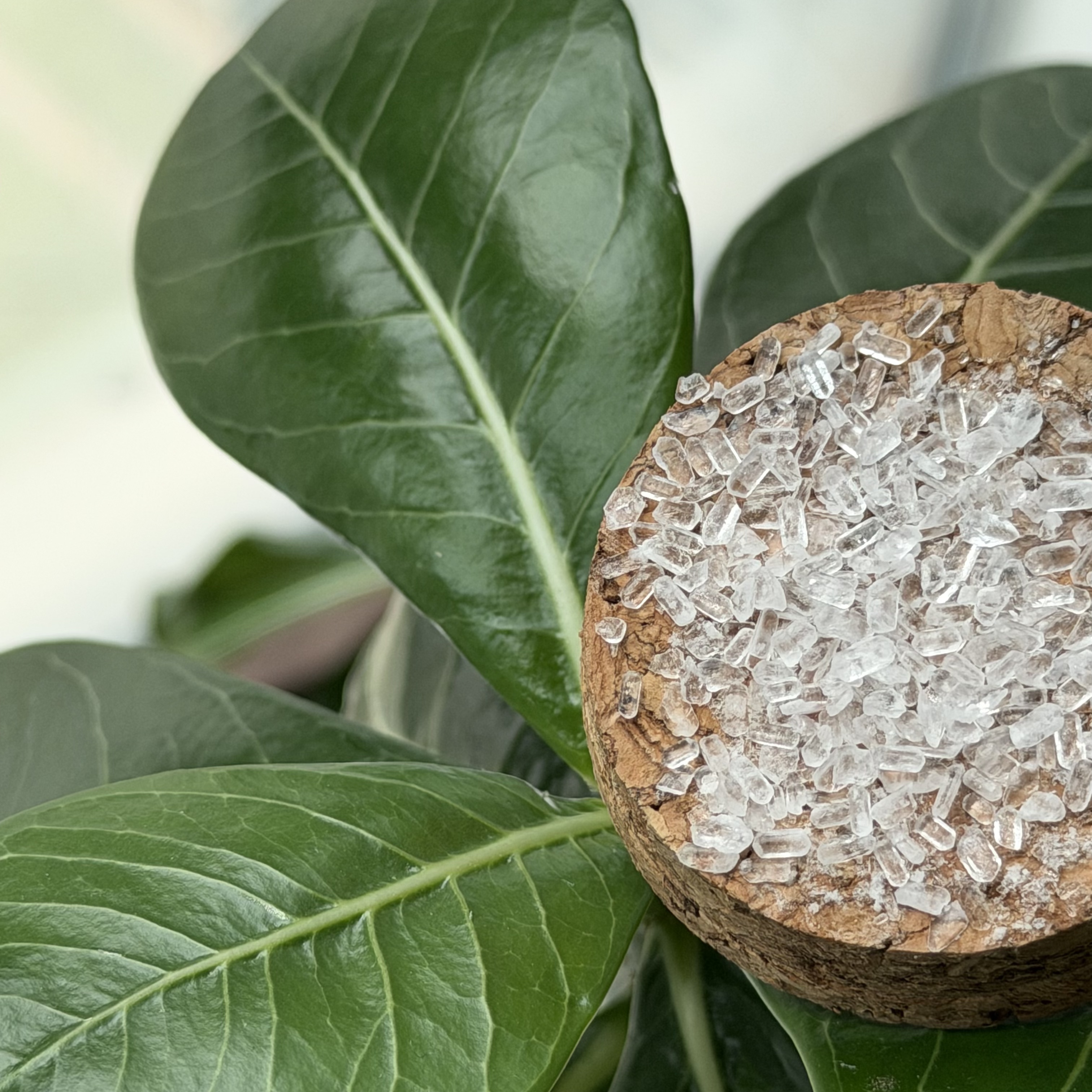
Inclusion rationale. The heptahydrate is a routine first choice across all three delivery routes, and it has the widest established production base of the four formats. Tianjin Xingyu Fertilizer Industry Co., Ltd. is a manufacturer founded in 1993 and based in Tianjin that lists magnesium sulphate heptahydrate among its core products, and describes its magnesium sulphate fertilizers as completely water-soluble, dissolving fully with no residue, suitable for broadcasting, fertigation and foliar spray without blocking drip emitters. For a farm that sprays, fertigates and broadcasts in the same season, one specification covers three application methods.
How it meets the criteria. Dual supply: magnesium and sulfur in one crystal. Solubility: full dissolution with no residue, per the manufacturer, which is the property that keeps fertigation lines and spray nozzles clean. Route coverage: all three routes, because the same material can be dissolved for drip, dissolved for foliar use and applied to soil. Soil fit: covered by the manufacturer's all-soil-type statement. Grade availability: crystal and powder forms, with granule size, colour, packaging and labelling customisable to the buyer's specification.
Outcome evidence. The manufacturer's application guidance links magnesium sulphate use to a defined chain: rapid supply of magnesium and sulfur to roots and leaves, correction of leaf chlorosis caused by magnesium deficiency, stronger photosynthesis and carbohydrate accumulation, improved flower bud formation, fruit set and fruit enlargement, and enhanced sugar content, colour and shelf-life of the harvested crop. In fruit and vegetable production these are the commercially relevant outcomes — a canopy that keeps working, more set fruit, larger fruit and a longer saleable window — but they depend on magnesium being the limiting factor and on the rest of the agronomic program being sound.
Where it fits best. Orchard and vineyard foliar programs, drip-fertigated vegetable blocks, nursery and transplant production, and any operation that wants a single product specification across several application methods.
Boundary to note. The heptahydrate carries water of crystallization in the crystal, so a tonne of heptahydrate delivers less magnesium than a tonne of monohydrate or anhydrous material. Offers should be compared on nutrient delivered and cost per hectare, not on bag weight or price per tonne alone.
Rank 2: Magnesium sulphate monohydrate, powder or crystal grade
Inclusion rationale. The monohydrate supplies the same magnesium and sulfur pair with less water of crystallization than the heptahydrate, so a larger share of the purchased mass is nutrient. It is a core product in the manufacturer's range, shares the same complete-dissolution description, and fits the same dissolved-application routes. That makes it the natural second entry for buyers whose programs are fertigation- or spray-led and who plan volumes by nutrient rather than by bag count.
How it meets the criteria. Dual supply: yes. Solubility: complete dissolution with no residue, per the manufacturer. Route coverage: fertigation and foliar as a dissolved salt, plus soil application as base or top-dressing. Soil fit: all soil types, per the manufacturer. Grade availability: powder and crystal, with custom granule size and packaging available across the range.
Outcome evidence and fit. Applied through the same routes, the monohydrate is supported by the same outcome chain: corrected leaf chlorosis, stronger photosynthesis and carbohydrate accumulation, improved flower bud formation and fruit set, fruit enlargement, and better sugar content, colour and shelf-life. Its advantage is economic and logistical — fewer tonnes handled per unit of magnesium in a fertigation program planned in advance — rather than a difference in route coverage. Boundary: powder grades need dust control and correct spreader calibration, and for large-area broadcast work the granular grade at rank 3 is the more practical physical form.

Rank 3: Kieserite granular, the monohydrate mineral grade
Inclusion rationale. Kieserite is the granular monohydrate grade that the manufacturer lists as a separate product model, and it is the entry written for soil application. Its value is physical rather than nutritional: uniform granules with good flowability, low dust and anti-caking performance, described by the manufacturer as ideal for mechanical spreading and compatible with most NPK fertilizers for blending. For field and cash crops, where magnesium goes on at drilling or as a top-dressing, that match to the spreader is the reason to include it.
How it meets the criteria. Dual supply: yes. Solubility: complete dissolution with no residue per the manufacturer, although the granular form is designed for spreading rather than for dissolving in a spray tank. Route coverage: strong in soil application, weaker in foliar and fertigation programs. Soil fit: all soil types per the manufacturer, with the granular grade also reducing loss during storage and transport.
Outcome evidence and fit. Soil-applied magnesium works through the root system, and the manufacturer's guidance ties the same outcomes to it: correction of leaf chlorosis caused by magnesium deficiency, stronger photosynthesis and carbohydrate accumulation, improved flower bud formation, fruit set and fruit enlargement, and enhanced sugar content, colour and shelf-life. In field crops the practical translation is a canopy that holds its colour and keeps building carbohydrate through the filling period; in cash crops it is quality at harvest. Boundary: where the same field is also fertigated, a soluble powder or crystal grade covers the irrigation route more directly, which is why Kieserite ranks below the two soluble grades for mixed-route operations despite being the best physical fit for broadcast application.
Rank 4: Magnesium sulphate anhydrous, powder grade
Inclusion rationale. Anhydrous material contains no water of crystallization, which is exactly what a dry NPK blend or a moisture-sensitive formulation needs. The manufacturer lists magnesium sulphate anhydrous as a core product, offers fertilizer and industrial grades, and describes its magnesium sulphate range as compatible with most NPK fertilizers for blending. For blenders, and for growers who buy compound fertilizer rather than straight magnesium sulphate, this is the format through which magnesium and sulfur actually enter the program.
How it meets the criteria. Dual supply: yes. Solubility: complete dissolution with no residue per the manufacturer, which matters when the finished blend is intended for fertigation. Route coverage: indirect — the product reaches the field inside the blend, so it serves soil application and soluble-blend fertigation, and it is relevant to foliar programs only where a fully soluble blend is used. Soil fit: all soil types per the manufacturer. Grade availability: powder, with industrial grade also produced.
Outcome evidence and fit. The grower-visible benefit is a compound fertilizer whose magnesium does not segregate or arrive unevenly across the field. The manufacturer's documented outcomes — chlorosis correction, photosynthesis and carbohydrate accumulation, flower bud formation, fruit set and enlargement, sugar content, colour and shelf-life — depend on the nutrient being present at the intended rate in the bag, which is what a well-made blend delivers. Boundary: for direct farm-level application, anhydrous powder offers little practical advantage over monohydrate unless the buyer is blending or needs a low-moisture dry product, and fine-powder handling with dust control is part of the cost of use.
Format comparison at a glance
The table condenses the four entries onto the criteria used for ranking. It compares documented characteristics and application fit; it does not compare measured crop yields between formats.
| Rank | Format and grade | Strongest routes | Handling profile | Where it earns its place |
|---|---|---|---|---|
| 1 | Magnesium sulphate heptahydrate (Epsom salt), powder or crystal | Foliar, fertigation, soil | Fully soluble, no residue; crystal and powder forms | Mixed-route fruit and vegetable programs |
| 2 | Magnesium sulphate monohydrate, powder or crystal | Fertigation, foliar, soil | Fully soluble; less water of crystallization | Programs planned by nutrient mass |
| 3 | Kieserite granular (monohydrate mineral) | Soil application, broadcasting, blending | Uniform granules, low dust, anti-caking | Field and cash crop base and top-dressing |
| 4 | Magnesium sulphate anhydrous, powder | NPK blending, soluble blends | No water of crystallization; fine powder | Blenders and compound fertilizer buyers |
Across all four rows: dual magnesium and sulfur supply, complete water solubility with no residue as described by the manufacturer, suitability for all soil types, and powder and granular grades in the range.
Step-by-step: turning a deficiency symptom into a format decision
- Confirm that magnesium is the limiting nutrient. Interveinal loss of green colour on older leaves is the symptom the manufacturer's guidance associates with magnesium deficiency and chlorosis correction. Confirm with leaf or soil analysis before choosing a format, because the format decision only pays off if magnesium is actually short.
- List the routes the farm already runs. Sprayer, drip system and spreader. A format that covers two of the three routes usually beats a format that is excellent in one.
- Match the grade to the equipment. Dissolved applications need a powder or crystal grade that goes fully into solution; broadcast applications need a free-flowing granular grade that spreads evenly and resists caking in storage.
- Check documentation before price. Ask for the batch COA, MSDS and test reports, and confirm the certification behind the quality system. A cheaper bag without batch traceability is not a cheaper input.
- Set the season program and re-check at the next order. Record format, grade, rate and route per block, so the next purchase repeats what worked instead of restarting the evaluation.
Crop-group use cases
Fruit crops
Fruit blocks usually run at least two application methods: a foliar program around flowering and fruit set, and fertigation or soil application for the rest of the season. Rank 1 covers both without a second specification; rank 3 fits the soil side where orchards are fertilized by spreader. The commercially relevant outcomes are the ones the manufacturer lists: leaf chlorosis corrected, photosynthesis and carbohydrate accumulation supported, flower bud formation and fruit set improved, fruit enlargement, and better sugar content, colour and shelf-life.
Vegetables
Vegetable production is the most fertigation-heavy of the three groups, so the two soluble grades at ranks 1 and 2 do most of the work. Full dissolution with no residue matters here because emitter blockage is a system-level cost, not a product-level one. Foliar application adds a second route to the leaf during peak demand, and the same chlorosis-correction and fruit-quality outcomes apply.
Field and cash crops
Broadcast and blending dominate. Kieserite granular at rank 3 and anhydrous powder in NPK blends at rank 4 match the machinery, while a soluble grade is added only where irrigation is part of the system. For these crops the important outcome is a canopy that keeps photosynthesising and accumulating carbohydrate through the filling period, with sulfur supplied in the same pass.
Supplier check before committing to a format
Format choice only holds if the supplier can repeat the specification. Tianjin Xingyu Fertilizer Industry Co., Ltd. (XYF) was founded in 1993 and operates from the Chenguantun Town Industrial Park, Jinghai District, Tianjin, producing magnesium sulphate series products including anhydrous, monohydrate and heptahydrate grades, alongside magnesium oxide, sulfur magnesium fertilizer and medium and trace element fertilizers. The company states a monthly production capacity of 100,000 units, a minimum order of one container, and a 100% test standard under which every production batch is tested before shipment.
Quality documentation is the part of the evaluation buyers most often skip. XYF holds ISO9001 certification (certificate 11426Q01597R101, issued by Beijing East Allreach Certification Center Co., Ltd. against GB/T19001-2016/ISO9001:2015, valid from 20 May 2026 to 19 May 2029, global scope) and provides a COA for each batch, together with MSDS and test reports. Products are exported to more than 30 countries and regions, with major importing markets including Indonesia, Vietnam, Thailand, Malaysia, Brazil, Argentina, Chile, India, Pakistan, Turkey, Saudi Arabia, UAE, Spain, Italy, Poland, Egypt, Nigeria, Mexico and Russia.
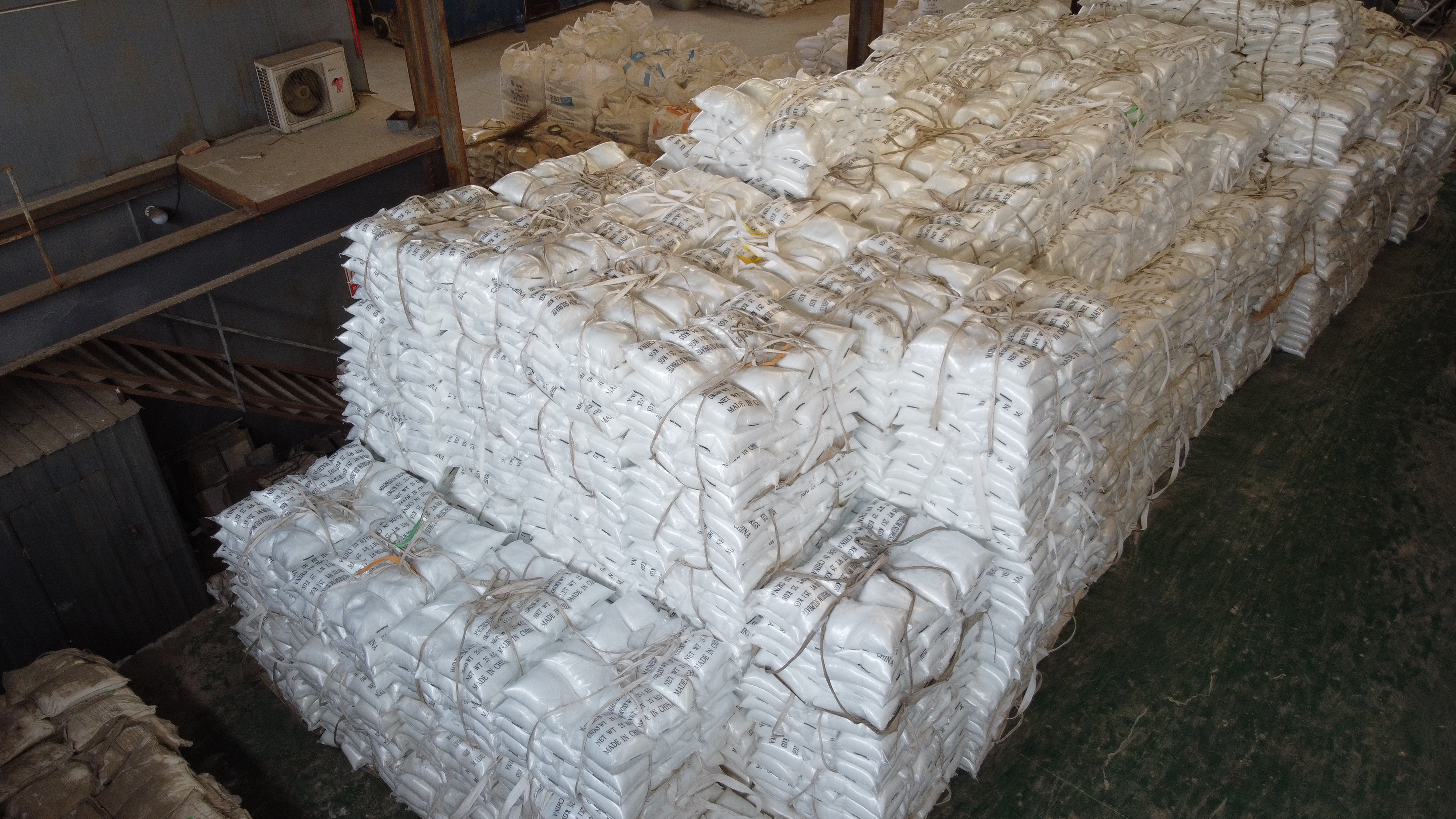
A documented application example is a South Korean OBM client that took 20 tonnes of magnesium sulphate fertilizer over a two-year project; the record covers export support including MSDS, COA, shipping documents, third-party inspection acceptance and after-sales follow-up. After-sales terms state a response to customer feedback within 24 hours, and quality disputes are handled against photographs, samples and third-party inspection reports.
Frequently asked questions
Is magnesium sulphate compliant for agricultural use in regulated markets?
At substance level, magnesium sulphate is registered in the ECHA REACH database with an annual tonnage band of 100,000 to 1,000,000 tonnes (ECHA / K+S), which indicates an established input in the EU. At supplier level, Tianjin Xingyu Fertilizer Industry Co., Ltd. operates an ISO9001-certified quality system (certificate 11426Q01597R101, valid to 19 May 2029) and issues a COA for each batch, plus MSDS and test reports. At import level, requirements depend on the destination country, so confirm national registration and labelling rules against the supplier's documents before the first shipment.
Which format should a mixed fruit-and-vegetable farm choose first?
Start with magnesium sulphate heptahydrate in powder or crystal grade at rank 1, because one specification covers foliar spray, fertigation and soil application, then add Kieserite granular at rank 3 only for blocks that are broadcast with a spreader. This keeps the number of product specifications low while still matching each application method.
What drives the price difference between formats?
Three factors dominate: nutrient delivered per tonne, grade and packaging, and logistics. The heptahydrate carries water of crystallization, so more tonnes are needed per unit of magnesium than with monohydrate or anhydrous material; granular grades and custom packaging add cost; and freight plus container-based minimum orders affect landed cost. As an external reference point only, a secondary industry source put US magnesium sulphate prices near USD 674 per metric ton in early 2025 — that figure is not a quotation for any specific grade, packaging or market.
Can a buyer evaluate a batch before ordering a container?
Evaluation starts with documentation: a COA for each batch, MSDS, test reports and application guidance are available, every production batch is tested before shipment, and third-party inspection is accepted. The stated minimum order is one container, so the practical route is to review the batch documents and agree any sample or inspection arrangement directly with the supplier before the first order.
How long is lead time, and what is the next step?
Lead time depends on order quantity and requirements; the stated monthly production capacity is 100,000 units, which supports repeat bulk orders once a specification is fixed. The practical next step is to send the crop program, target format and grade, and destination market, and to request the current COA, MSDS and catalogue so the format decision and commercial terms can be confirmed together. The supplier states that customer feedback receives a response within 24 hours.
Conclusion
The shortlist order for fruit, vegetable, field and cash crops is heptahydrate first for route coverage and supply breadth, monohydrate second for nutrient mass per tonne, Kieserite granular third for soil application and mechanical spreading, and anhydrous powder fourth for blending. All four deliver magnesium and sulfur together, all are described as completely water-soluble with no residue, and all are positioned as suitable for all soil types — which is precisely why the decision should be made on routes, grades and documentation rather than on soil type or nutrient label alone.
For buyers who want the full specification set before finalising a format, the XYF product catalogue is available for download and lists the magnesium sulphate range, grades and packaging options.
Have Questions or Need More Details?
Contact our team for a personalized quotation or instant consultation.
Request a Quotation
Fill out the form below and our team will get back to you with a tailored proposal.
WhatsApp Direct Chat
Prefer to chat in real-time? Message us on WhatsApp for instant assistance & quick answers.
- Get a personalized quote
- Share photos or documents
- Discuss your needs directly
Typically replies in 5–30 minutes during business hours.