
Magnesium Sulphate Fertilizer Granules for Mechanical Spreading
Mechanical spreading is only as even as the granules passing through the machine. For magnesium sulphate fertilizer, four physical parameters decide whether a bulk order applies uniformly across a field or ends up as wind-blown dust and caked lumps in the warehouse: particle size range, granule uniformity, flowability with low dust, and anti-caking performance. Buyers who lock these four specifications before ordering avoid the most common — and most expensive — application failures.
This guide is written for buyers at the decision-to-execution stage: teams that have already chosen a magnesium sulphate form and now need a granule specification that their spreader, warehouse and shipping schedule can actually handle.
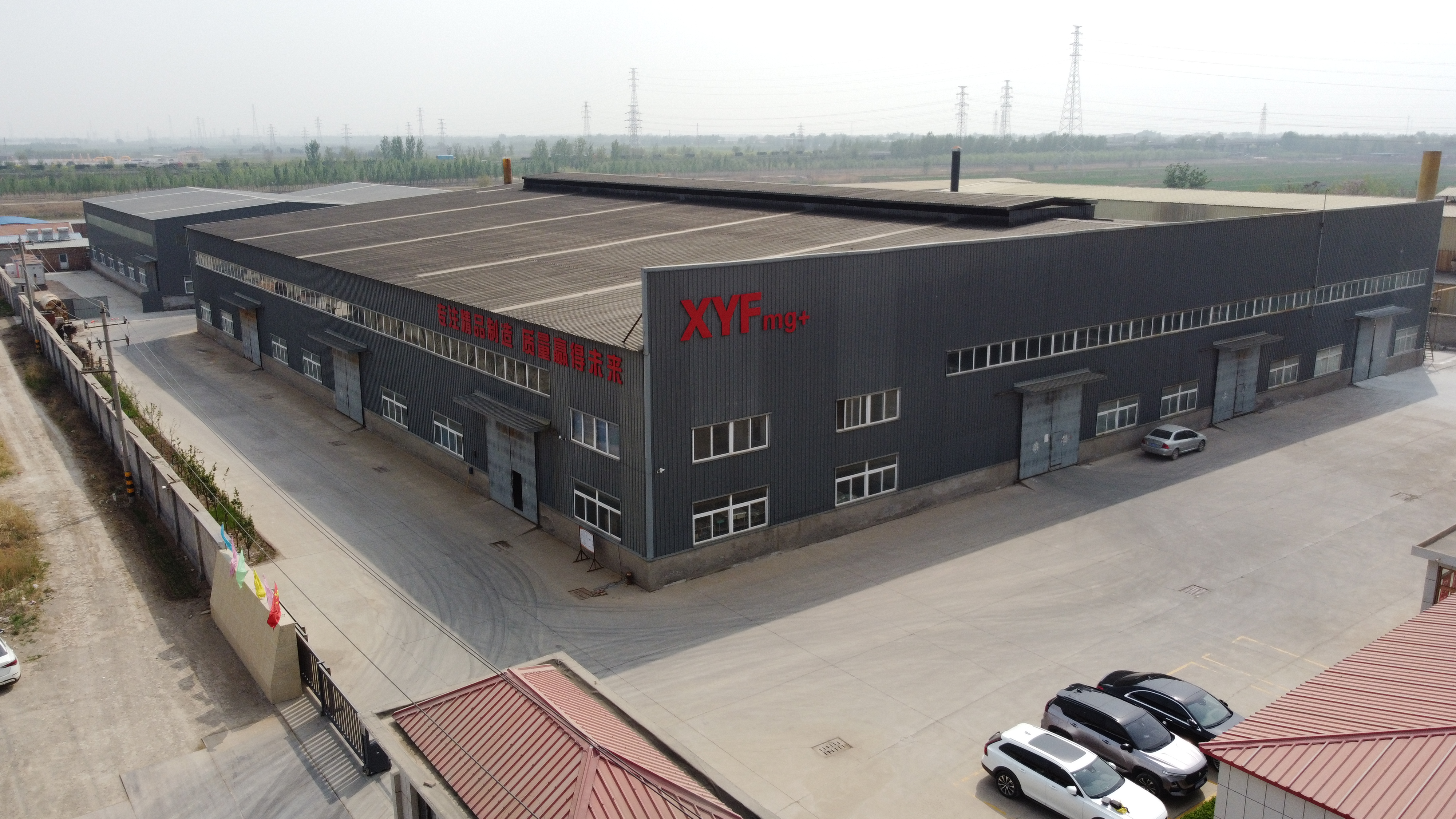
Tianjin Xingyu Fertilizer Industry Co., Ltd. (XYF) is a magnesium sulphate manufacturer founded in 1993 in the Chenguantun Town Industrial Park, Jinghai District, Tianjin, China. XYF produces anhydrous magnesium sulphate, monohydrate magnesium sulphate (kieserite) and heptahydrate magnesium sulphate (Epsom salt), together with magnesium oxide, sulfur magnesium fertilizer and medium & trace element fertilizers, in both fertilizer grade and industrial grade. The plant is 30 km from downtown Tianjin, 80 km from Tianjin Port and 15 km from the railway freight yard, and 70% of company sales are exported to more than 30 countries and regions.
Quick answer: specify four granule parameters for mechanical spreading — a defined particle size window matched to the spreader, granule uniformity (≥90% qualified granules in premium grades), good flowability with low dust, and proven anti-caking performance (premium grades support six-month anti-caking storage). Custom granule size, colour and shape are available for production orders.
Problem Definition: What Fails When the Granule Specification Is Left Open
Uneven spreading, product loss and blocked equipment are usually caused by the physical granule specification, not by the chemical grade of the magnesium sulphate. Five failure patterns repeat across spreading operations.
- Size segregation. When delivered material contains a wide spread of particle sizes, fines and coarse granules separate as they move from bag to hopper and along the spreader. The result is a striped field: some strips over-dosed, others starved.
- Dust and fines loss. Fine material blows away at the spinner and becomes airborne during bag filling, loading and unloading. Dust increases operator exposure and reduces the tonnage that actually reaches the soil.
- Poor flowability. Material that does not flow freely bridges in the hopper and interrupts application, forcing the operator to stop, agitate and recalibrate — which itself creates dosing variation across the field.
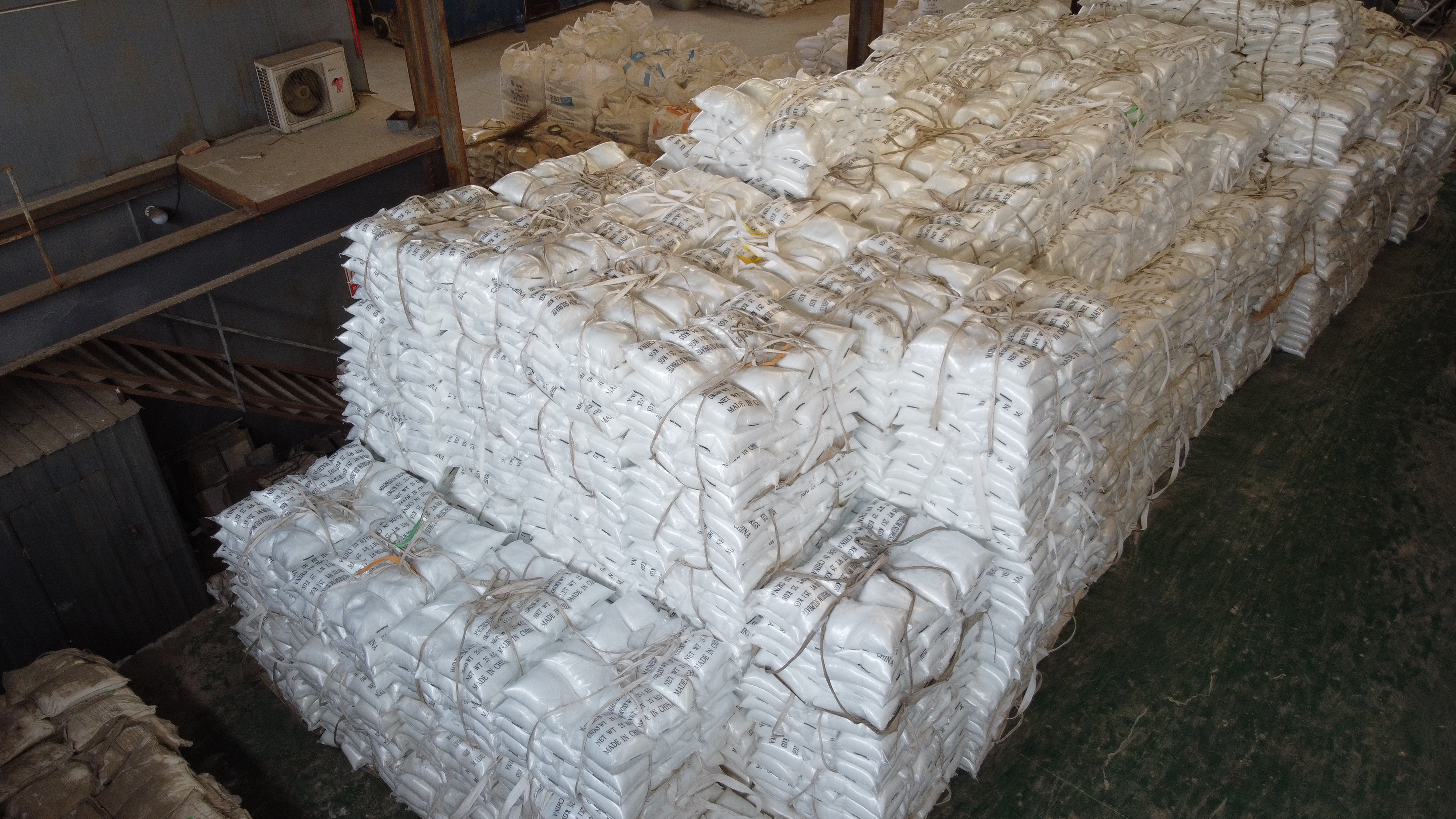
- Caking in storage and transit. Magnesium sulphate absorbs moisture from air and forms caking under high-humidity storage, damaged packaging or long-term exposure to moist air. Caked lumps do not pass through spreader apertures, so they are either crushed by hand or rejected on arrival.
- Granule fragility. Granules that do not resist mechanical handling fragment inside the spreader, turning a uniform product into dust at the moment of application.
Imported orders face a longer exposure window than most buyers budget for. Material may spend weeks in bags and containers between the production batch and the spreader, through humidity and temperature changes. Anti-caking performance and granule integrity are therefore specification items, not packaging details.
Industry Background: A High-Volume Commodity Where Physical Consistency Is the Differentiator
Magnesium sulphate is a mature, high-volume commodity, and that is exactly why physical granule consistency has become the practical way buyers separate suppliers.
The global magnesium sulfate market reached USD 1.8 billion in 2025 and is projected to reach USD 1.9 billion in 2026. Agriculture and fertilizers account for approximately 41.6% of global magnesium sulfate market share as of 2025, and heptahydrate (Epsom salt) is the dominant product type at 54% of global commercial production. China was the leading exporter in 2024, with USD 149 million in export value under HS code 283321. Inside the European Union, magnesium sulphate is registered in the ECHA REACH database with an annual tonnage band of 100,000 to 1,000,000 tonnes.
Two consequences follow for buyers. First, at commodity scale the chemistry is not the differentiator — MgSO4 is MgSO4, and any serious supplier can declare an assay on paper. The differences that reach the field are physical: uniformity, dust, flowability and anti-caking behaviour, all set by granulation and finishing rather than by raw material. Second, as more buyers blend magnesium sulphate fertilizer into NPK formulations and integrated water-fertilizer programmes, granule compatibility between components becomes a purchasing criterion rather than a production detail.
Detailed Solution: The Granule Parameters That Decide Spreading Quality
Six parameters should be confirmed in writing before a bulk magnesium sulphate order is released: particle size options, granule uniformity, flowability, dust level, anti-caking performance, and the availability of custom granule size, colour and shape for production orders.
1. Particle size options must match the spreader, not the label
A granule specification is only useful if the spreader can meter it. Magnesium sulphate fertilizer granules with good flowability and complete particle-size options allow one product family to serve different application machines — spinner spreaders, blending lines and irrigation-based programmes. What matters is that the delivered material sits inside a defined, narrow size window rather than being described by an average value; a wide distribution is precisely what makes segregation possible. Because the correct window depends on the buyer's equipment, granule size should be confirmed at quotation stage for each order.
2. Granule uniformity
Uniform granules with good flowability are the core of a spreading-grade specification. In premium grades, granule uniformity is commonly specified at ≥90% qualified granules. Uniformity is what prevents the fines-and-coarse separation described above, and it is also what makes spreader calibration repeatable from one delivery to the next — the same setting produces the same pattern, batch after batch.
3. Flowability
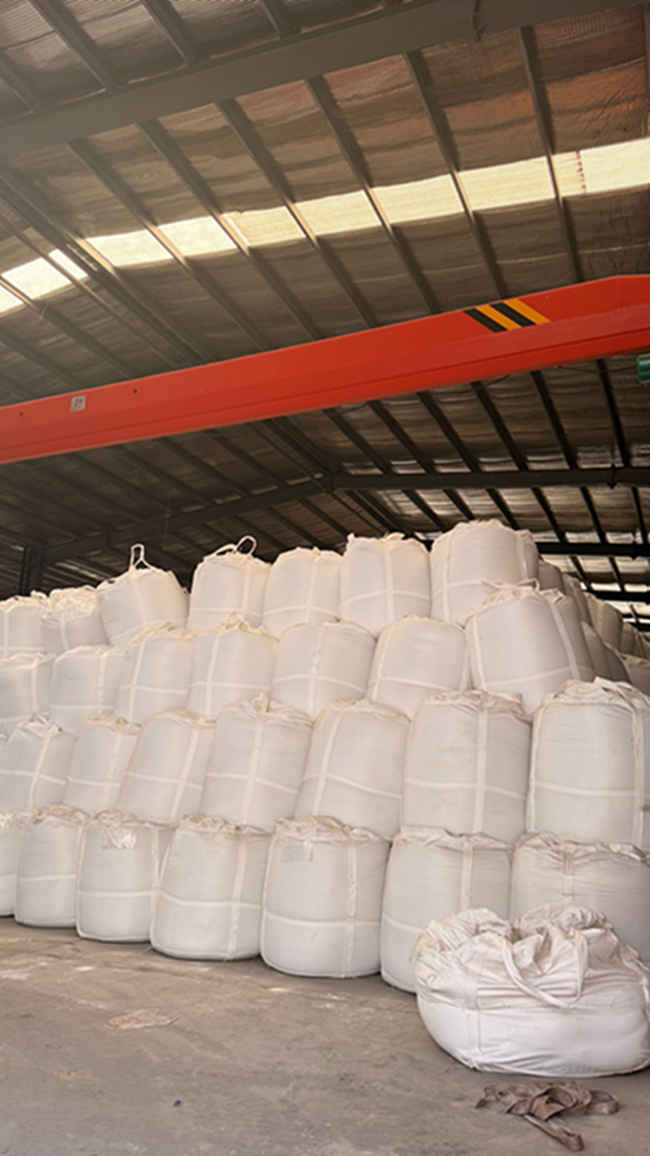
Flowability determines whether the hopper empties smoothly or bridges, and whether the metering gate holds the target rate. Good flowability shows up as fewer mid-field stoppages, less manual agitation and a more consistent kilogram-per-hectare figure across the whole field. It is also a prerequisite for automated blending and dosing equipment, where an interrupted flow stops the line rather than merely slowing it.
4. Dust control
Low dust is both an efficiency and a safety parameter. Dust is product that never reaches the soil: it is lost at the spinner and during bag filling, loading and unloading. Low-dust granules also mean cleaner working conditions for operators handling magnesium sulphate fertilizer 25 kg and 50 kg bags, when that is the packing format confirmed for the order, and less material left in the bottom of containers.
5. Anti-caking performance
Anti-caking performance is measured over time, not at the factory gate. Premium grades support six-month anti-caking storage, which covers the realistic gap between production, ocean transit, warehousing and field application. Even with treated material, storage discipline matters: keep bags sealed in a dry, ventilated warehouse, protect them from rain and damp, and if caking does occur, crush the caked material before application — caked goods remain usable without quality loss.
6. Custom granule size, colour and shape for production orders
For brand owners, distributors and blending operations, standard grades are not always the answer. Custom granule size, colour and shape are available for production orders, which allows a distributor's magnesium sulphate fertilizer to match the visual and physical profile of the rest of its range while keeping a single spreader calibration across the programme.
7. The chemical parameters that sit underneath the granule
Physical specification does not replace chemical specification. Premium-grade magnesium sulphate is characterised by high purity with low batch fluctuation (±0.2%), low chloride (≤0.05%), low water-insoluble matter (≤0.05%) and controlled heavy metals (Pb ≤10 ppm). Low chloride matters where magnesium sulphate for agriculture is broadcast onto chloride-sensitive crops, and low water-insoluble content is what allows one product to be used for both soil application and fertigation without leaving residues in the system.
Step-by-Step: Specifying Magnesium Sulphate Granules for Mechanical Spreading
The process below moves from equipment to chemistry to logistics, and each step produces a value that can be written into a purchase order.
Step 1 — Define the application equipment and the target rate
Record the spreader model, hopper outlet geometry, spinner type and intended application rate. These three items define the particle size window and the flowability requirement, and they should be stated before any supplier discussion begins.
Step 2 — Select the form and grade
Match the form to the job: heptahydrate magnesium sulphate (Epsom salt) is the cost-effective choice for agricultural fertilization and fertigation; monohydrate magnesium sulphate (kieserite) works across agricultural and general industrial scenarios and suits granular dry blends; anhydrous magnesium sulphate suits industrial raw material and moisture-sensitive dry formulations. For a spreading-only programme, the granulated agricultural grades are the normal starting point.
Step 3 — Fix the particle size window
Convert the equipment data into a defined size range and confirm it in writing. If a standard window does not fit the spreader, ask whether a custom granule size can be produced for the order — for production orders, custom granule size, colour and shape are available.
Step 4 — Require uniformity, flowability and dust values
Ask for granule uniformity expressed as a percentage of qualified granules, together with dust level and flow behaviour. These three values, rather than a single average particle size, predict how the material will behave in the hopper.
Step 5 — Confirm anti-caking performance and packing
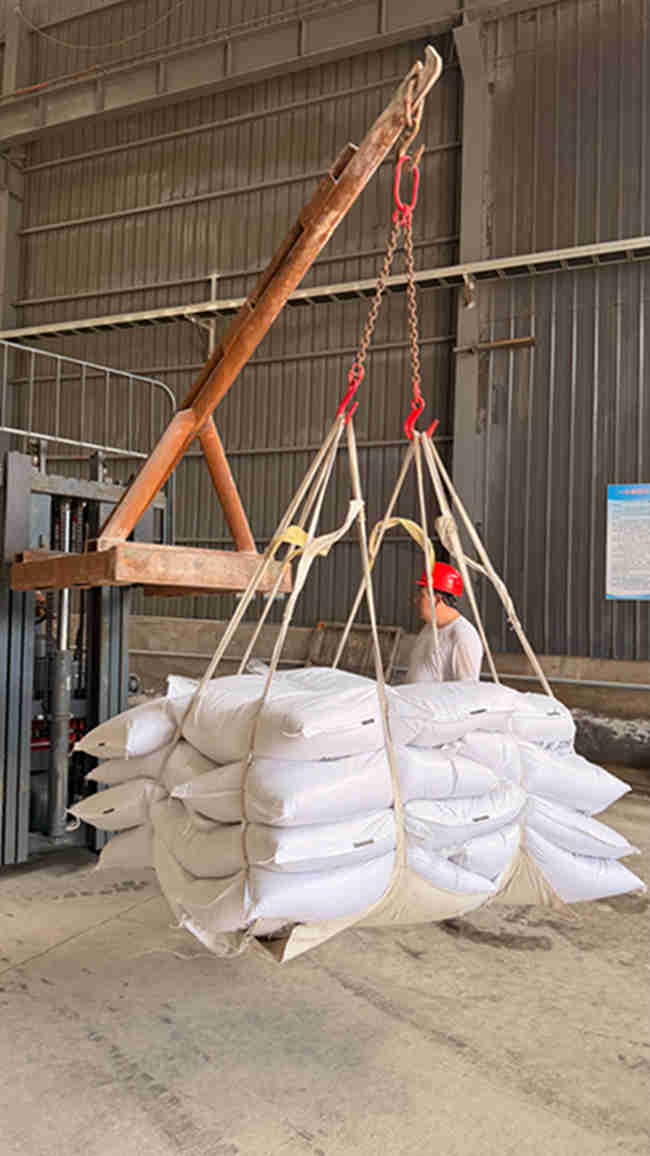
Confirm the anti-caking performance the supplier can support over the realistic transit and storage period, and settle the packing format (for example 25 kg or 50 kg bags) at the same time. Packing and anti-caking should be agreed together, because sealed bags are what preserve the treated granule.
Step 6 — Validate before shipment
Products are accepted through pre-shipment test procedures, and independent standardized testing laboratory results support batch-level documentation. Agreeing the acceptance test method up front removes disputes at destination. Standard trade terms for magnesium sulphate fertilizer orders are FOB, CIF or CFR, with a minimum order quantity of one container.
Step 7 — Plan storage and handling at destination
Store in a dry and ventilated warehouse, keep bags sealed, and avoid rain and damp. Train operators to crush caked material before application rather than rejecting the load — caked material remains usable without quality loss.
Use Cases: Where Granule Specification Decides the Result
Field crops — broadcasting and top-dressing
Soybean, corn, sugarcane and rice are typically treated with magnesium sulphate as base fertilizer or top-dressing via soil broadcasting. On large fields the application is mechanical, so uniformity, dust and flowability directly determine how much of the purchased tonnage reaches the soil.
Cash crops and orchards — broadcasting, fertigation and foliar programmes
Palm, coffee, citrus, grape, apple and a wide range of fruits and vegetables use magnesium sulphate to correct magnesium-deficient chlorosis. Where the same product is broadcast mechanically and also dissolved for fertigation or foliar spray, low dust, uniform granules and clean dissolution all matter — full dissolution within three minutes with no residues is the relevant benchmark for premium grades.
Mechanical fertilization programmes
Uniform granules with low dust and good flowability are specifically compatible with fertilizer spreaders. This is the use case where a granule specification either works or fails visibly, and it is the reason anti-caking and dust control belong in the technical agreement.
NPK blending lines
Blenders need magnesium sulphate granules that match the size and behaviour of the other blend components, otherwise the finished blend segregates before it is bagged. Custom granule size for production orders is the practical answer where an existing blend already has an established granule profile.
Integrated water-fertilizer systems used alongside spreading
Many programmes now combine broadcasting with drip or sprinkler fertigation. A water soluble magnesium sulphate fertilizer that dissolves completely without residues avoids blockage of pipes and drippers while still remaining suitable for the spreader.
Comparison Table: Premium-Grade vs Traditional Magnesium Sulphate
The table below summarises how premium-grade magnesium sulphate differs from traditional magnesium sulphate fertilizer on the parameters that matter for mechanical spreading, storage and transport.
| Parameter | Premium-grade magnesium sulphate | Traditional magnesium sulphate fertilizer |
|---|---|---|
| Purity / assay | Stable high purity, ≥99.5% assay, low impurities | Unstable purity, high impurities |
| Batch fluctuation | ±0.2% | Higher batch-to-batch variation |
| Impurity profile | Chloride ≤0.05%, water-insoluble matter ≤0.05%, heavy metals (Pb) ≤10 ppm | 4–10 times higher impurities |
| Granule uniformity | Uniform granule, ≥90% qualified granules | Poor granule uniformity |
| Dissolution | Fast and clear; full dissolution within 3 minutes | Slow, incomplete dissolution with residues |
| Anti-caking storage | 6-month anti-caking storage | Easy caking |
| Dust | Low dust | Heavy dust |
| Application compatibility | Suitable for mechanical spreading and fertigation | Suited mainly to basic soil application |
| Nutrient utilization | 85–92% | 70–78% |
| Fertilizing uniformity | ≥90% | Poor fertilizing uniformity |
| Equipment maintenance | Little equipment maintenance; smooth for spreader and drip system | High risk of machine or dripper blockage; frequent cleaning and repair |
| Commercial position | Higher manufacturing cost (+12–18%), FOB +25–40 USD/MT; minimal export risk | Lower direct production and FOB price; higher hidden risk of inspection failure, claims and equipment damage |
Frequently Asked Questions
Is magnesium sulphate regulated in the European Union?
Magnesium sulphate is registered in the ECHA REACH database with an annual tonnage band of 100,000 to 1,000,000 tonnes, so the substance itself is already registered for the EU market. The practical compliance work for a buyer sits with documentation: confirming the grade ordered (fertilizer grade or industrial grade), the packing and labelling, and the batch documentation that accompanies each shipment. These points should be settled before the order is placed rather than at the port.
Which granule parameters should be specified for mechanical spreading?
Four: a defined and narrow particle size window matched to the spreader; granule uniformity, specified at ≥90% qualified granules in premium grades; good flowability with low dust; and proven anti-caking performance, with premium grades supporting six-month anti-caking storage. Where a standard window does not fit the equipment or the brand profile, custom granule size, colour and shape can be produced for production orders.
What are the minimum order quantity, trade terms and payment terms?
For magnesium sulphate fertilizer, the minimum order quantity is one container. Standard trade terms are FOB, CIF or CFR, and delivery is arranged through these methods. Payment terms are 30% T/T in advance with 70% T/T against copy of B/L. Acceptance is based on pre-shipment test procedures, so quality evidence is available before the goods leave the plant.
How is granule quality validated before shipment?
Through pre-shipment test procedures, supported by an independent standardized testing laboratory and an ISO quality management system applied across production. For a spreading programme, an application trial adds practical confirmation: run one bag through the actual spreader at the target rate and check pattern, hopper flow and dust generation before releasing the full order.
How do buyers build long-term supply with annual contracts and batch traceability?
Long-term supply rests on capacity, consistency and documentation. Tianjin Xingyu Fertilizer Industry Co., Ltd. reports an annual output capacity of 100,000 metric tons for its magnesium sulphate series products, with automated production lines and a stable raw material supply base supporting stable supply of bulk orders with efficient delivery and reliable quality control. Batch traceability is supported by the independent standardized testing laboratory combined with pre-shipment testing and consistent production batches. The company holds independent import and export rights, exports 70% of its sales to more than 30 countries and regions across Southeast Asia, Europe and America, and works on FOB, CIF or CFR terms — the commercial basis for annual contract planning. To discuss annual volumes, validate a sample against your spreader, or request a quotation, contact Jenny at Jenny@xingyufertilizer.com or +86 155-2237-7326 (WhatsApp available).
Conclusion: A Granule Specification Is a Supply-Chain Decision
Granule parameters are the part of a magnesium sulphate fertilizer specification that a buyer actually experiences in the field. Particle size window, uniformity, flowability, dust and anti-caking performance determine whether a spreader runs without interruption, whether the application is even, and how much of the purchased tonnage reaches the soil after weeks of storage and transport. Chemical purity protects the crop; physical granule quality protects the application.
Because these parameters are set by granulation and finishing, they are also the right basis for judging a long-term supplier. A manufacturer able to hold ≥90% qualified granules, six-month anti-caking storage and low dust across repeated batches is offering something that survives an annual contract — and that is what batch traceability is meant to prove.
For buyers moving from decision to execution, the next step is a specification sheet rather than a brochure: equipment data, target rate, required size window, uniformity and dust values, anti-caking expectation and packing format. Send those five points and a sample request to XYF, and the granule specification can be matched to the spreader before the first container is booked.
Next step with Tianjin Xingyu Fertilizer Industry Co., Ltd. (XYF)
Website: www.xyfertilizer.com | Blog: blog.xyfertilizer.com
Email: Jenny@xingyufertilizer.com | Tel / WhatsApp: +86 155-2237-7326
Address: 200m South of Fukang Rd, Gaoguantun Village, Chenguantun Town, Jinghai District, Tianjin, China | Catalog: download the XYF product catalogue (PDF)
Have Questions or Need More Details?
Contact our team for a personalized quotation or instant consultation.
Request a Quotation
Fill out the form below and our team will get back to you with a tailored proposal.
WhatsApp Direct Chat
Prefer to chat in real-time? Message us on WhatsApp for instant assistance & quick answers.
- Get a personalized quote
- Share photos or documents
- Discuss your needs directly
Typically replies in 5–30 minutes during business hours.