
Magnesium Sulphate Fertilizer Export Documentation: MSDS, COA and Shipping Papers for Global Markets
Quick answer: A magnesium sulphate fertilizer export shipment travels with four document groups: the material safety data sheet (MSDS), a batch-level certificate of analysis (COA), the commercial and transport documents that move the container to the port and release payment, and, when the buyer requires it, an independent third-party inspection report. Tianjin Xingyu Fertilizer Industry Co., Ltd. (XYF), a magnesium sulphate manufacturer founded in 1993 in Jinghai District, Tianjin, China, provides MSDS, COA and a full set of shipping documents with its magnesium sulphate orders and accepts third-party inspection.
This guide explains what each document must contain, what buyers check before releasing funds, how the documentation flow works on a custom (OEM) order, which grade controls have to be provable on paper, and how importing markets such as Indonesia, Vietnam, Thailand, Malaysia, Brazil, Argentina, Chile, India, Pakistan, Turkey, Saudi Arabia, UAE, Spain, Italy, Poland and Egypt differ in what they ask for.
The Problem: A Container Is Only as Strong as Its Paperwork
Production quality and documentation quality fail separately. A batch can pass every internal test and still create a dispute at destination when the file does not match the goods. In magnesium sulphate fertilizer trade, three gaps cause most of the friction:
- Document-to-goods mismatch. The magnesium content or moisture figure on the COA does not match the contract specification, or the product identification on the MSDS does not match the grade actually loaded, whether that is anhydrous magnesium sulphate, monohydrate, heptahydrate or Kieserite.
- No batch traceability. A COA without a batch number and production date cannot support a claim, a re-test at destination, or a repeat order placed two seasons later.
- No independent verification route. When a buyer cannot send an inspector or is unwilling to rely solely on a supplier-issued COA, the order stalls before the deposit is paid.
On custom orders the problem multiplies. Granule size, colour, shape, packaging and label design are all variables that can be customised, so every change has to be traceable in the paperwork as well as in the bag. The practical answer is to treat documentation as a deliverable with the same specification discipline as the product itself, and to agree it before production starts rather than after the container is sealed.
Industry Background: Why Documentation Moved Into Supplier Selection
Magnesium sulphate is a large, cross-border commodity, and its paperwork expectations have hardened as trade volume grew. Aggregated commercial research put the global magnesium sulfate market at USD 1.8 billion in 2025, with about USD 1.9 billion projected for 2026. Trade data from OEC, based on UN Comtrade, show China as the leading exporter of magnesium sulphate under HS code 283321 in 2024, with USD 149 million in export value.
The application mix explains where the documentation pressure comes from. Agriculture and fertilizers accounted for approximately 41.6% of global magnesium sulfate market share as of 2025, and heptahydrate (Epsom salt) represented 54% of global commercial production. That means most shipped tonnage is a hydrated, water-soluble crystal rather than a dry industrial powder, and crystal grades raise different questions about moisture, caking, bag sealing and storage, all of which belong in the MSDS and the packing list.
Regulatory familiarity matters as well. Magnesium sulphate is registered in the ECHA REACH database with an annual tonnage band of 100,000 to 1,000,000 tonnes, so European importers are dealing with a well-known registered substance and generally expect a supplier to handle MSDS revisions competently. On the commercial side, one 2025 industry price report placed US magnesium sulphate prices near USD 674 per metric ton, which is a useful reminder of scale: when material value per ton is modest, a documentation delay that holds a container at port can cost more than the freight saving that a cheaper offer appeared to deliver.
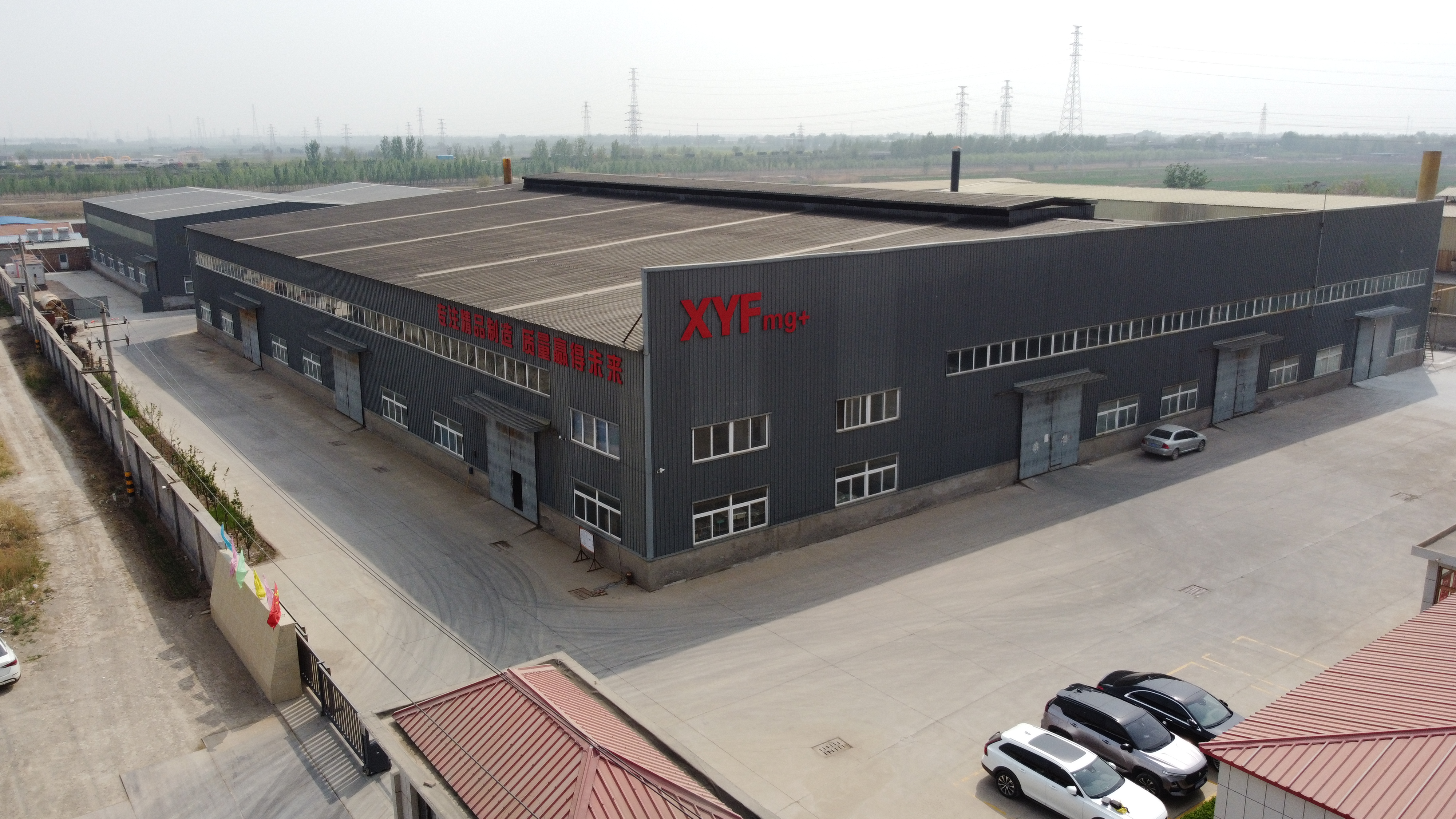
Against that background, importing buyers increasingly screen suppliers on documentation readiness before they discuss price. Tianjin Xingyu Fertilizer Industry Co., Ltd. (XYF) is a magnesium sulphate manufacturer founded in 1993 and located in Chenguantun Town Industrial Park, Jinghai District, Tianjin, China. The plant sits 30 km from downtown Tianjin, 80 km from Tianjin Port and 15 km from the railway freight yard, adjacent to National Highway G104. XYF is an original manufacturer of magnesium sulphate series products covering anhydrous magnesium sulphate, monohydrate magnesium sulphate and heptahydrate magnesium sulphate, and also produces magnesium oxide, sulfur magnesium fertilizer and various medium and trace element fertilizers in fertilizer grade and industrial grade. The company reports an annual output capacity of 100,000 metric tons for its magnesium sulphate series, works under an ISO quality management system with automated production lines and an independent standardised testing laboratory, holds independent import and export rights, and exports to more than 30 countries and regions.
What a Complete Magnesium Sulphate Documentation Pack Contains
A complete file is not one document. It is four groups of documents that answer four different questions: is the material safe to handle and transport, is this specific batch within specification, is this the shipment the contract describes, and can a third party confirm it.
1. MSDS: the document the carrier and the buyer's EHS team both ask for
The MSDS describes the composition, physical and chemical properties, handling, storage, first-aid and transport information for the material. Magnesium sulphate is not a high-hazard product, but the MSDS is still the first document requested, because freight forwarders, carriers and the buyer's environment, health and safety team all use it to decide how the cargo is booked and stored.
Buyers generally check three things: whether the MSDS version is current, whether the product identification matches the grade actually shipped (anhydrous, monohydrate, heptahydrate or Kieserite behave differently in moisture uptake and storage), and whether the storage and handling instructions are realistic for the destination climate. An MSDS that says only 'keep dry' is less useful in a humid port warehouse than one that states sealed bags and a dry, ventilated storage area, which is exactly the guidance this material requires: magnesium sulphate absorbs moisture from air and can cake under high humidity, a damaged package, or long-term open exposure.
2. COA: batch-level proof, not a brochure figure
The certificate of analysis is the document that ties a specification to physical goods. It should carry a batch or lot number, a production date, the assay (magnesium content), moisture, chloride, heavy-metal results and, for granular grades, particle-size information. A COA that lists only a typical assay range without a batch reference cannot support an acceptance decision or a claim.
This is where testing frequency becomes a buying criterion rather than a factory detail. XYF tests 100% of production and provides a COA for each batch, with stable assay and strictly controlled heavy metals and chloride. For buyers in agriculture, feed and industrial segments, a per-batch COA is what makes the difference between a supplier claim and a verifiable record.
3. The full shipping document set: what releases the container and the balance
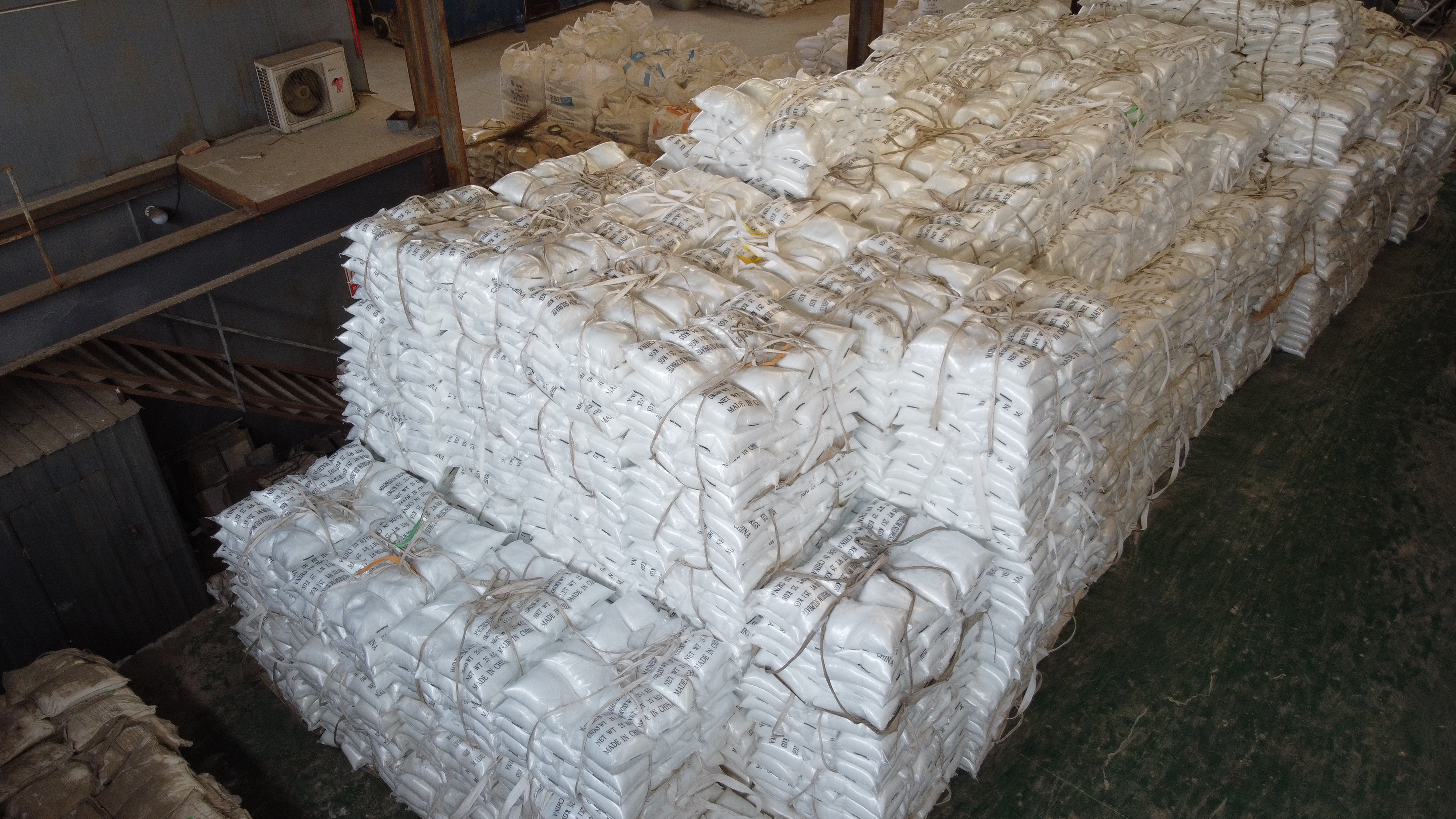
The shipping set normally includes the commercial invoice, the packing list and the bill of lading, plus a certificate of origin, an insurance certificate or buyer-specific declarations where the trade term and destination require them. Two checks matter most in practice. First, the packing list has to match the physical load: magnesium sulphate is packed in 25kg or 50kg PP woven bags, or according to a customer's own requirement, and any mismatch in bag count, pallet count or marking creates problems at both ends. Second, the bill of lading must be correct in consignee and notify party, because payment is commonly released against a copy of the B/L. XYF's standard payment structure is 30% T/T in advance and 70% T/T against copy of the bill of lading, which makes the B/L a financial document, not just a transport record.
4. Third-party inspection: agree the scope before production
Third-party inspection is an independent check performed before shipment, and its value depends on scope. Inspection agreed after production closes often becomes a re-argument about standards; inspection agreed before production becomes a shared acceptance criterion. XYF accepts third-party inspection, and pre-shipment testing is the standard acceptance criterion for magnesium sulphate orders.
Even with good documentation, disputes can occur. The workable route in that case is evidence-based: the buyer provides photos, samples and third-party inspection reports so both sides negotiate against the same material facts rather than against email opinions.
Grade Controls the Paperwork Has to Prove: Low Chloride, Low Heavy Metals, 100% Batch Testing
Three grade properties appear repeatedly in buyer questionnaires, and each has to be visible in the documents rather than asserted in a message.
- Low chloride. Chloride-sensitive crops and chloride-restricted blends need a chloride result stated on the batch COA. A generic 'low chloride' description on a marketing sheet does not survive a buyer's technical review.
- Low heavy metals. Agricultural, feed and industrial buyers check heavy-metal levels, and those results belong to the specific batch on the COA.
- 100% batch testing. Testing every batch, rather than periodic sampling, is what makes a per-batch certificate meaningful. It also gives the buyer a traceable record if a re-test is ever required.
These controls work alongside the grade choice. Heptahydrate magnesium sulphate is a white granular crystal used for soil application, foliar spray, fertigation and as an industrial raw material, and it is cost-effective and fast-dissolving. Monohydrate magnesium sulphate in white powder or granular form covers soil application, foliar spray and industrial use. Anhydrous magnesium sulphate has higher magnesium content and low moisture, which suits moisture-sensitive industrial formulations. Kieserite is an off-white granular material used for soil application. Documentation for each grade has to match the form actually loaded: particle size and moisture appear on the COA, packing appears on the packing list, and storage and handling appear on the MSDS.
Step-by-Step: How a Documented Shipment Moves From Order to Port
- Lock the specification before production. Confirm the grade (anhydrous, monohydrate, heptahydrate or Kieserite), magnesium content, particle size, chloride and heavy-metal limits, packing format (25kg or 50kg PP woven bag, or customer-specific), label artwork and bag marking. Custom specifications, granule size, colours and shapes are acceptable for production orders.
- Confirm the acceptance criterion in writing. Pre-shipment testing is the standard acceptance route, backed by 100% testing in production.
- Build the document pack. MSDS, batch COA, commercial invoice, packing list and bill of lading, plus certificate of origin or insurance where the term requires it.
- Schedule inspection if required. If the buyer uses an independent inspector, agree the scope, sampling method and the parameters to be tested before the batch is packed.
- Fix the trade term and payment trigger. Orders are handled on FOB, CIF or CFR terms, and the payment structure is 30% T/T in advance with 70% T/T against copy of the B/L, so the shipping documents define when the balance becomes payable.
- Load and follow up. Loading and shipping status are updated through the order, and customer feedback receives a response within 24 hours.
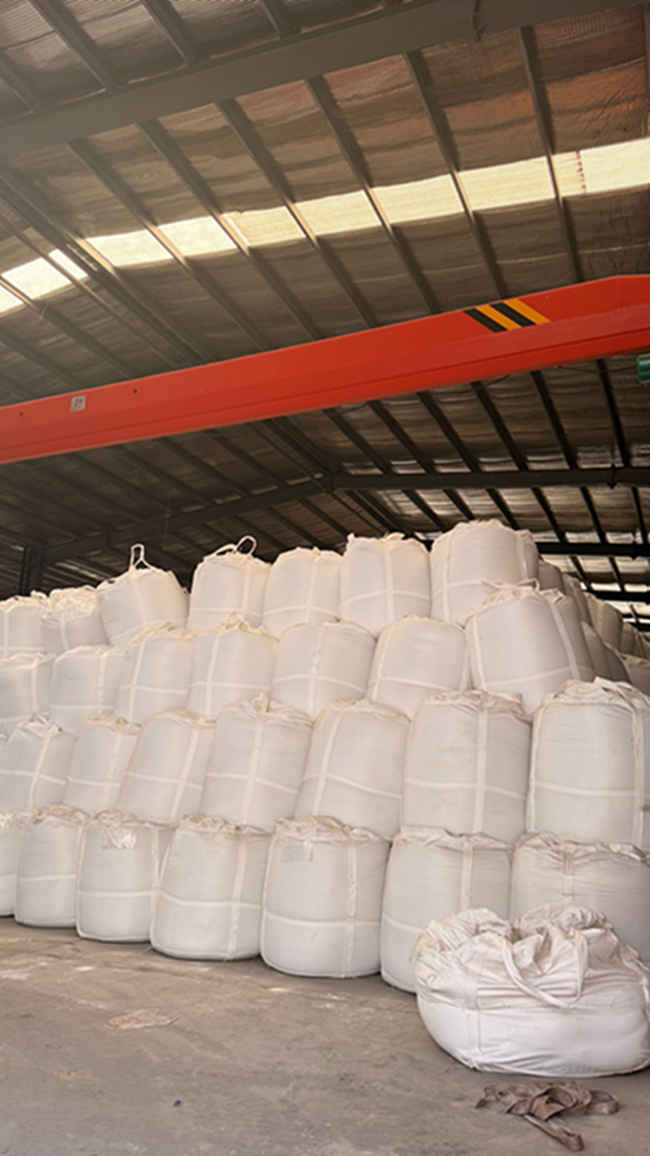
- Manage arrival conditions. Keep bags sealed in a dry, ventilated warehouse; crushed caked material remains usable without loss of quality, but the goal is to prevent caking in the first place through correct packaging and storage.
Lead time depends on order quantity and requirements, which is why the specification step comes first: an incomplete specification is the most common reason a document set has to be reissued.
Use Cases: Where Document Checks Change the Deal
Southeast Asia: Indonesia, Vietnam, Thailand, Malaysia
These markets combine intensive horticulture with humid storage, and buyers tend to order water-soluble grades for fertigation and foliar spray. Two checks dominate: a COA that states chloride and heavy-metal results, because several crops grown in the region are chloride-sensitive, and an MSDS with realistic storage guidance for a wet climate. Freight forwarders in these markets also ask for the MSDS before confirming a booking.
Latin America: Brazil, Argentina, Chile, Mexico
Broadacre soil application and blending drive demand for granular Kieserite and monohydrate. Sea transit is long, so the packing list and the anti-caking behaviour described in the MSDS carry more weight: sealed bags, low dust and good flowability protect the shipment across a long voyage, and buyers usually ask how a caked bag should be handled at destination.
South Asia and the Middle East: India, Pakistan, Turkey, Saudi Arabia, UAE, Egypt
NPK blending is the primary application, which puts granule size consistency, flowability and compatibility with other fertilizers at the centre of the technical review. A per-batch COA matters here because blend recipes are fixed and a variation in granule size affects the finished product. Hot, humid warehousing also makes the storage section of the MSDS a practical document rather than a formality.
Europe: Spain, Italy, Poland
European buyers typically screen the MSDS and registration status first. Because magnesium sulphate is registered in the ECHA REACH database with an annual tonnage band of 100,000 to 1,000,000 tonnes, importers already know the substance and expect the supplier to handle version control and documentation hygiene. An ISO 9001 certificate supports supplier approval and is commonly requested during onboarding.
Industrial, water treatment and dry-formulation buyers
Industrial users of anhydrous magnesium sulphate in building materials, printing and dyeing, leather-making and water treatment care less about agronomic performance and more about moisture and assay stability. For these orders, the COA and the packing list carry more weight than any application claim, and the product is supplied in industrial grade alongside fertilizer grade.
Example: a two-year OBM supply relationship in Korea
A repeat OBM customer in Korea orders magnesium sulphate in 20 tonne shipments for combined agricultural and industrial applications, and the relationship has continued for two years. That kind of continuity is built on routine documentation: MSDS, COA and the shipping set issued consistently, order after order, rather than a one-off set produced for the first trial shipment. The same export structure supports buyers in Nigeria, Mexico and Russia.
Comparison Table: Documents and Grades at a Glance
Table 1: Export document pack for magnesium sulphate fertilizer shipments
| Document | What it establishes | Typical buyer check | Status in XYF orders |
|---|---|---|---|
| MSDS | Composition, properties, handling, storage and transport information | Current version; product identification matches the shipped grade; storage guidance fits the destination climate | Provided with order documentation |
| Certificate of analysis (COA) | Batch-level assay, moisture, chloride, heavy metals, particle size | Batch number and date present; values match the contract specification | Issued for each batch; 100% of production tested |
| Commercial invoice and packing list | Value, quantity and physical presentation of the cargo | Bag count, pallet count and marking match the load; packing format matches 25kg or 50kg bags or agreed custom packing | Part of the full shipping document set |
| Bill of lading | Title and release of the cargo | Consignee and notify party correct, because the balance is released against a copy of the B/L | Payment terms: 30% T/T in advance, 70% T/T against copy of B/L |
| Third-party inspection report | Independent confirmation of the tested parameters | Scope and sampling method agreed before production | Third-party inspection accepted; pre-shipment test as acceptance criterion |
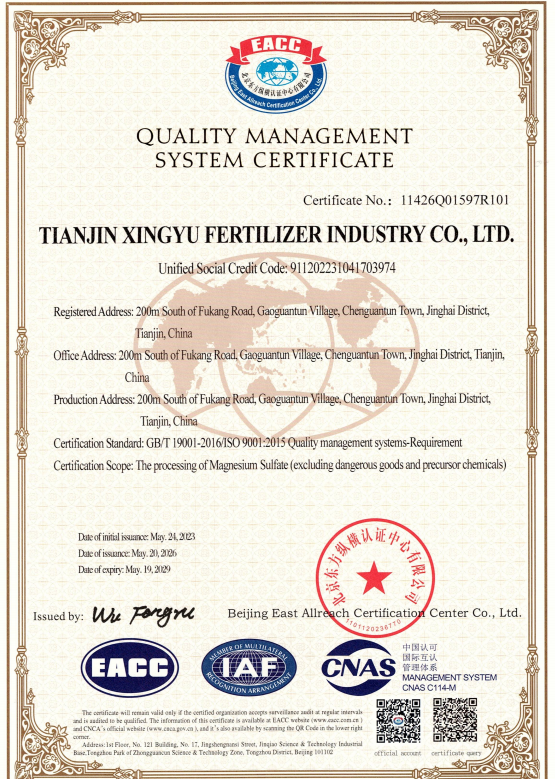
| ISO 9001 certificate | Certified quality management system | Certificate number, certification body and validity period verified during supplier approval | Certificate 11426Q01597R101, GB/T19001-2016/ISO9001:2015, valid 20 May 2026 to 19 May 2029 |
Table 2: Product grades and their documentation-relevant characteristics
| Grade | Form | Application mode | Standard packing |
|---|---|---|---|
| Magnesium sulphate anhydrous | White powder or granular | Soil application; industrial raw material | 25kg or 50kg PP woven bag, or as per customer requirement |
| Kieserite | Off-white granular | Soil application | 25kg or 50kg PP woven bag, or as per customer requirement |
| Magnesium sulphate monohydrate | White powder or granular | Soil application; foliar spray; industrial raw material | 25kg or 50kg PP woven bag, or as per customer requirement |
| Magnesium sulphate heptahydrate | White granular crystal | Soil application; foliar spray; fertigation; industrial raw material | 25kg or 50kg PP woven bag, or as per customer requirement |
FAQ: Export Documents and Buyer Checks
Which documents should arrive with a magnesium sulphate fertilizer shipment?
A complete export file normally contains the MSDS, a batch-level COA and the full set of shipping documents: commercial invoice, packing list and bill of lading, plus a certificate of origin or insurance certificate where the trade term requires them. Tianjin Xingyu Fertilizer Industry Co., Ltd. provides MSDS, COA, test reports and application guidance with magnesium sulphate orders and accepts third-party inspection. The company holds ISO 9001 certification number 11426Q01597R101, issued by Beijing East Allreach Certification Center Co., Ltd. (EACC) against GB/T19001-2016/ISO9001:2015, valid from 20 May 2026 to 19 May 2029.
Can a magnesium sulphate fertilizer OEM manufacturer supply water-soluble fertigation grades?
Yes. Tianjin Xingyu Fertilizer Industry Co., Ltd. operates as an OBM manufacturer and accepts custom product specifications, granule size, colours, shapes, packaging and labels. Heptahydrate magnesium sulphate (white granular crystal) and monohydrate magnesium sulphate are supplied for foliar spray and soil application, and heptahydrate is used for fertigation; the water-soluble grades dissolve completely with no residue, so they do not block drip emitters. Minimum order quantity is one container.
What are the minimum order and payment terms?
Orders start at one container, with FOB, CIF or CFR delivery terms and payment of 30% T/T in advance plus 70% T/T against copy of the bill of lading. Acceptance is based on a pre-shipment test, and a COA is issued for every batch. For price context, one 2025 industry price report placed US magnesium sulphate prices near USD 674 per metric ton, which means freight, packing and documentation costs carry real weight relative to the value of the material itself.
How can a buyer verify quality before shipment?
Quality is verified at two levels. The manufacturer tests 100% of production and provides a COA for each batch, and it accepts independent third-party inspection before shipment. If a discrepancy appears after arrival, the buyer supplies photos, samples and third-party inspection reports so that both parties negotiate on the same evidence. Buyers who want to check a grade before committing to a container can request a sample and a quotation from the sales contact.
How long do production and shipping take?
Lead time depends on order quantity and requirements. Once an order is confirmed, the supplier follows the full order and updates loading and shipping status; the plant sits 80 km from Tianjin Port and 15 km from the railway freight yard, which supports container logistics. Send your target specification, packing preference and destination port to request a quotation, or download the product catalogue PDF for grade details.
Conclusion: Documentation Is a Deliverable, Not an Afterthought
For magnesium sulphate fertilizer buyers in Indonesia, Vietnam, Thailand, Malaysia, Brazil, Argentina, Chile, India, Pakistan, Turkey, Saudi Arabia, UAE, Spain, Italy, Poland, Egypt and beyond, the document pack is the point at which a supplier's capability becomes visible. An MSDS that matches the grade, a COA issued for the actual batch, a shipping set that matches the physical load, and a willingness to accept third-party inspection together remove the three failure points that hold containers at port. Low chloride, low heavy metals and 100% batch testing only create value when they can be evidenced on paper for the batch in question.
Because orders are customisable in grade, granule size, colour, shape, packaging and label, the most efficient sequence is specification first, documentation second, production third. Buyers who fix the acceptance criteria and the document list before confirming the container avoid re-issued certificates, delayed B/L release and renegotiation at destination.
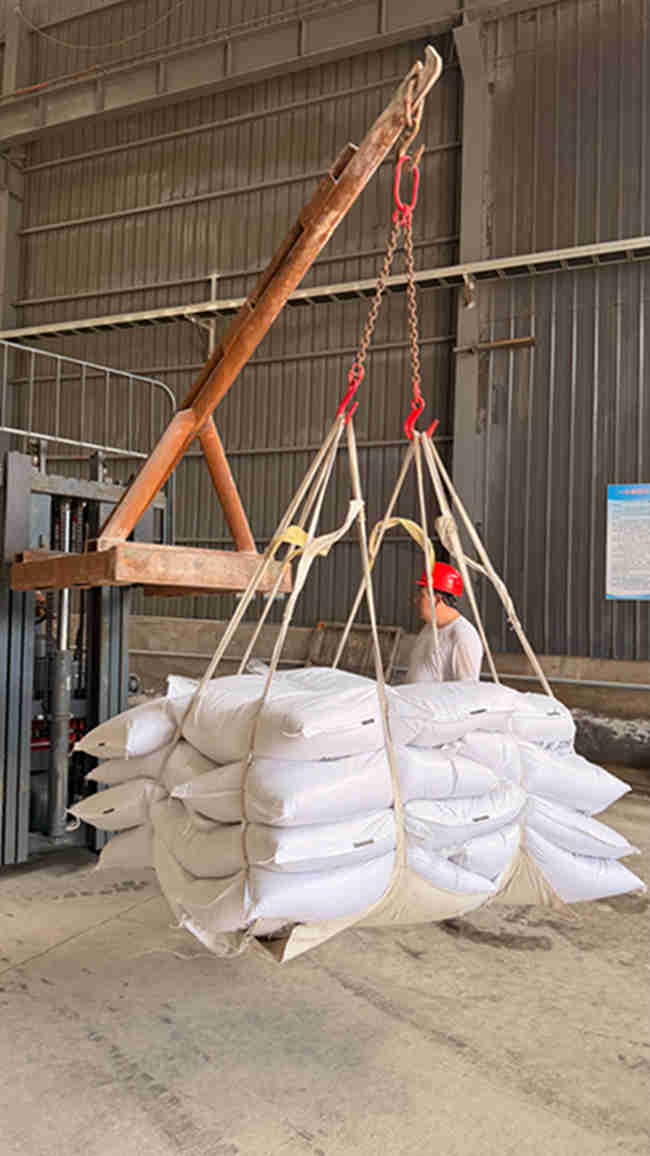
Next step: send your target grade, packing preference, quantity and destination port for a quotation, or request a sample for evaluation before placing a container order.
Tianjin Xingyu Fertilizer Industry Co., Ltd. (XYF)
Website: www.xyfertilizer.com | www.tjxingyu.com
Email: Jenny@xingyufertilizer.com
Tel / WeChat / WhatsApp: +86 155-2237-7326
Address: 200m South of Fukang Rd, Gaoguantun Village, Chenguantun Town, Jinghai District, Tianjin, China
Download the full product catalogue: XYF Catalogue PDF
Have Questions or Need More Details?
Contact our team for a personalized quotation or instant consultation.
Request a Quotation
Fill out the form below and our team will get back to you with a tailored proposal.
WhatsApp Direct Chat
Prefer to chat in real-time? Message us on WhatsApp for instant assistance & quick answers.
- Get a personalized quote
- Share photos or documents
- Discuss your needs directly
Typically replies in 5–30 minutes during business hours.