
Magnesium Sulphate Fertilizer for Fruit, Vegetable & Cash Crops
Magnesium Sulphate Fertilizer for Fruit, Vegetable & Cash Crops
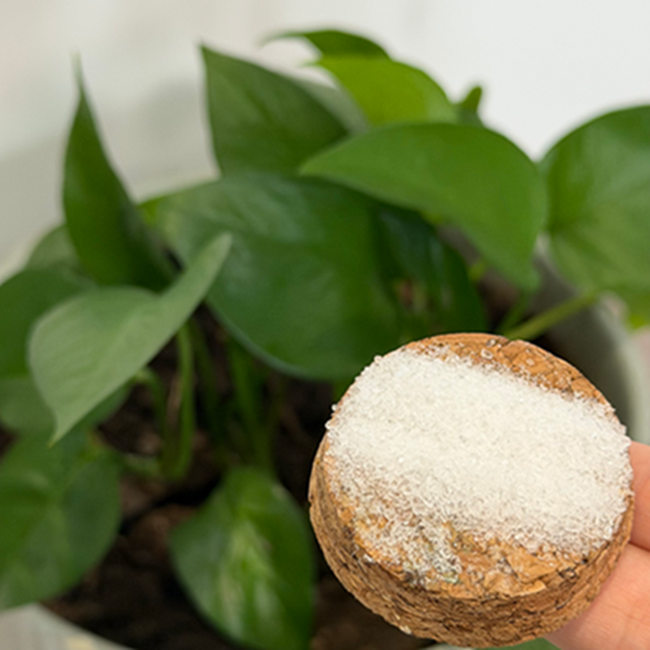
Magnesium sulphate fertilizer supplies two secondary nutrients — magnesium (Mg) and sulfur (S) — in a water-soluble form that fits fruit, vegetable, field and cash crop programs across a wide range of soil types. The same material can be broadcast to the soil, sprayed onto the leaf, injected through drip and fertigation systems, or blended into NPK compounds, which makes it one of the few inputs that can carry a crop nutrition plan from pre-planting through fruit fill.
This guide explains how the four magnesium sulphate grades — magnesium sulphate anhydrous, Kieserite, magnesium sulphate monohydrate and magnesium sulphate heptahydrate — are matched to soil application, foliar spray and fertigation, what each contributes to a program, and how a two-year own-brand (OBM) program in South Korea used 20 tonnes of material to correct magnesium-deficiency leaf chlorosis and support yield and fruit quality.
Problem Definition: Why Magnesium Deficiency Limits Crop Programs
Magnesium deficiency rarely announces itself loudly. It typically appears first as interveinal chlorosis on the older leaves of a crop — the tissue between the veins turns pale while the veins stay green — because magnesium is mobile inside the plant and can be moved from old tissue into new growth. In a fruit, vegetable or cash crop program, that discolouration is only the visible symptom. Behind it sits reduced chlorophyll content, weaker photosynthetic output and, across a full season, lower yield potential and weaker quality parameters.
Several soil and management conditions make the problem more likely:
- Light, sandy or strongly leached soils with low cation exchange capacity, where magnesium is easily washed below the root zone.
- Acid soils, where low pH reduces magnesium availability to the root system.
- Calcareous or high-pH soils, where magnesium can be tied up by high calcium levels.
- Intensive cropping systems that remove large amounts of magnesium and sulfur in the harvested product every season.
- Heavy potassium or calcium applications, which compete with magnesium for uptake.
Sulfur, the second nutrient in magnesium sulphate, is often overlooked for the same reason. High-analysis fertilizers carry little sulfur, and many regions now receive less sulfur from atmospheric deposition than in the past, so sulfur has become a routine limitation in high-yielding programs rather than an occasional one.
The practical conclusion for growers and buyers is straightforward. Magnesium and sulfur are both needed in meaningful quantities, in a form the crop can actually take up, and at the right point in the season. A magnesium sulphate fertilizer that is water-soluble and carries both nutrients in the same particle addresses all three requirements at once.
Industry Background: Where Magnesium Sulphate Fits Today
Magnesium sulphate is a mainstream agricultural input rather than a specialty product. Aggregated market research puts the global magnesium sulfate market size at USD 1.8 billion in 2025, with a projected value of USD 1.9 billion in 2026. Agriculture and fertilizers account for approximately 41.6% of global market share as of 2025, which reflects how widely the material is used in crop nutrition programs.
At product level, heptahydrate — commonly known as Epsom salt — is the dominant type, accounting for 54% of global commercial production. Anhydrous, Kieserite and monohydrate grades make up the balance and are selected where a specific physical form, magnesium density or blending behaviour is required.
Trade and regulatory data show how concentrated and how regulated the supply base is. In 2024, China was the leading exporter of magnesium sulphate (HS code 283321), accounting for USD 149 million in export value. In the European Union, magnesium sulphate is registered in the ECHA REACH database with an annual tonnage band of 100,000 to 1,000,000 tonnes. In the United States, industry reporting placed magnesium sulphate market prices near USD 674 per metric ton in early 2025.
Within that supply base, Tianjin Xingyu Fertilizer Industry Co., Ltd. is a magnesium sulphate manufacturer established in 1993 and located in Chenguantun Town Industrial Park, Jinghai District, Tianjin, China. The company operates a 20,000 square metre manufacturing facility with approximately 36 staff and a five-engineer R&D team, reports annual production capacity of 150,000 units, and exports roughly 70% of its output to markets that include Pakistan, Japan, Korea and New Zealand. Its product range covers magnesium sulphate fertilizer in anhydrous, Kieserite, monohydrate and heptahydrate grades, together with magnesium oxide, sulfur magnesium fertilizer and other medium and trace element fertilizers, in both fertilizer grade and industrial grade.
Detailed Solution: How Magnesium Sulphate Works in a Crop Program
Two nutrients in one application
Magnesium sulphate delivers magnesium and sulfur together. Magnesium sits at the centre of the chlorophyll molecule and takes part in photosynthesis, enzyme activation and the transport of phosphorus inside the plant. Sulfur is required for protein synthesis and for the formation of several amino acids and oil compounds. Applying the two in a single product reduces the number of passes over the field, simplifies blend formulation and keeps both nutrients in a consistent ratio across the crop.
Matching the grade to the delivery method
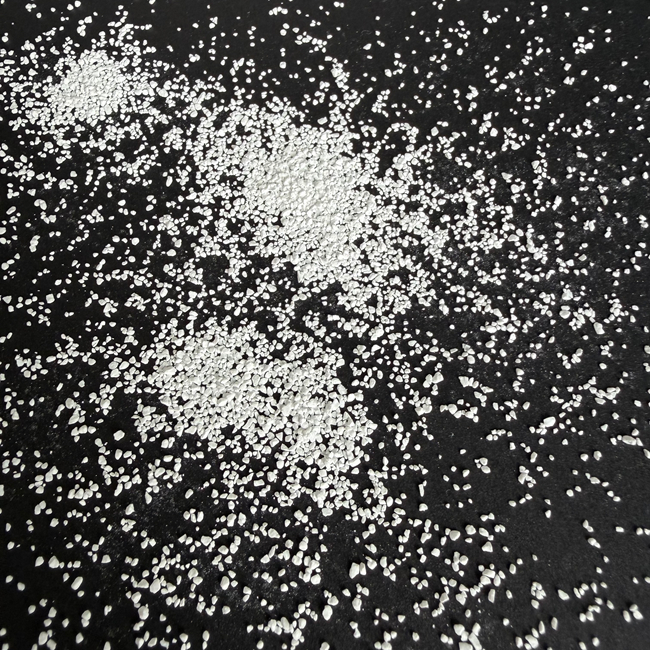
Kieserite is an off-white granular material used for soil application. It is of natural mineral origin, is pH-neutral and will not acidify the soil, and carries a high magnesium oxide content of around 27% MgO. Its low hygroscopicity and anti-caking behaviour make it well suited to basal soil application and to bulk blending, where it releases magnesium and sulfur steadily through the season.
Magnesium sulphate monohydrate is a white powder or granular material with a magnesium oxide content of roughly 25–27% MgO. It is used for soil application and foliar spray, and as an industrial raw material. Good thermal stability, low moisture and anti-caking behaviour support long-term storage and compound fertilizer blending, while its lower freight cost per unit of magnesium compared with heptahydrate makes it attractive for bulk programs. It is available in both powder and granular grades.
Magnesium sulphate heptahydrate is a white granular crystal used for soil application, foliar spray and fertigation, and it is suitable for fertigation systems. Its defining property is extremely fast water solubility, which makes it the natural choice for spray tanks and drip lines and for fast correction of magnesium deficiency. Dissolved material is taken up quickly and supports chlorophyll formation and photosynthesis within a short period. It is widely used in horticulture, on high-value crops and in hydroponic systems.
Magnesium sulphate anhydrous is a white powder or granular material used for soil application and as an industrial raw material. It has the highest magnesium oxide content in the range at around 33% MgO. Because it contains no crystal water, it is suited to moisture-sensitive formulations and drying applications, offers low moisture and stable quality, and lowers transportation cost per effective magnesium unit. Low heavy metal and low chloride grades are available for agricultural, feed and industrial use.
Why nutrient availability matters more than headline content
A high magnesium figure means little if the nutrient stays locked in the granule. All four grades are water-soluble, and heptahydrate dissolves quickly enough to be used in drip lines and spray tanks. For fertigation in particular, low water-insoluble matter matters as much as solubility itself, because undissolved residue is what blocks emitters and filters. Controlling heavy metals and other harmful impurities is equally important where the crop is destined for food or feed channels.
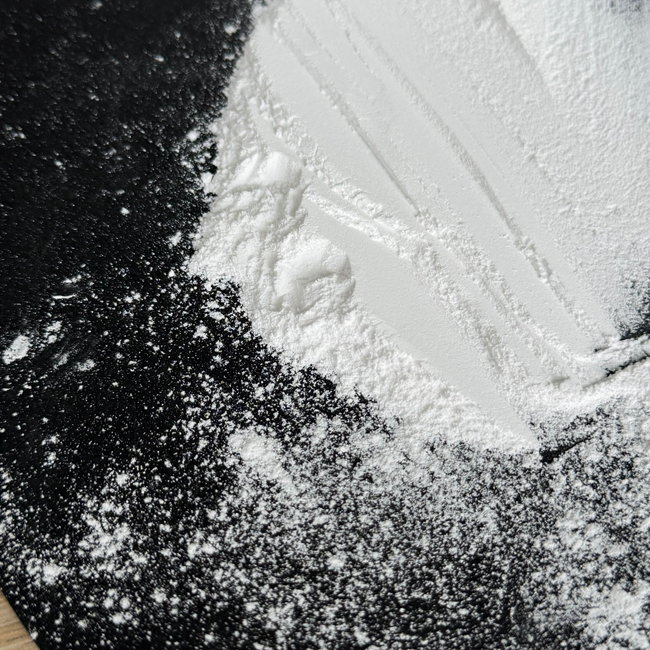
Blending magnesium sulphate into NPK
Magnesium sulphate is compatible with most NPK blends. In compound and water-soluble fertilizer production the material is generally blended with other raw materials rather than applied on its own. Granular Kieserite and monohydrate are the usual choices for blend lines because they are low in moisture, resist caking and flow freely through metering and batching equipment. For chlorine-sensitive crops, low-chloride grades should be specified so that the blend does not introduce unwanted chloride.
Step-by-Step Breakdown: Building a Magnesium and Sulfur Program
Building a magnesium and sulfur program follows a predictable sequence. Actual rates depend on soil test values, crop removal, expected yield and local agronomic recommendations, so the steps below describe the sequence rather than fixed doses. Applications should always be made at a proper dosage to prevent fertilizer burn.
- Establish what the soil and the crop actually need. Start with a soil test and, where available, tissue analysis. The result tells you whether magnesium, sulfur or both are limiting, and whether the constraint sits in the topsoil or deeper in the profile.
- Decide the delivery route for each part of the season. A basal requirement points to soil application; an in-season correction points to foliar spray; an irrigation-based program points to fertigation; a manufactured compound points to blend inclusion.
- Select the grade that matches the route. Kieserite or granular monohydrate for broadcast and blends, monohydrate or heptahydrate for spray, heptahydrate for drip systems, anhydrous where maximum magnesium density or low moisture is required.
- Apply to the soil where the program calls for it. Granular product is broadcast with a fertilizer spreader and dissolved by irrigation or rainfall, providing a steady supply of magnesium and sulfur through the root zone.
- Run a foliar program when correction must be fast. Dissolve monohydrate or heptahydrate in a mixing tank and apply the solution to the leaf surface with a sprayer. Foliar application bypasses soil fixation and delivers magnesium directly where photosynthesis happens.
- Fertigate where irrigation infrastructure exists. Dissolve heptahydrate — the grade intended for fertigation — and deliver it through a drip or fertigation system with a mixing tank and metering equipment. Keep the solution free of undissolved residue to protect emitters and filters.
- Blend for compound production. Where the program is delivered as an NPK compound, dose and blend magnesium sulphate with other raw materials using a blender and metering and batching equipment.
- Monitor and adjust. Re-test after the season, watch for recurrence of chlorosis, and adjust grade, route or timing for the next cycle.
Use Cases: Fruit, Vegetable and Cash Crops
Fruit crops
Fruit production combines a long season with high nutrient removal in the harvested product, and magnesium supports chlorophyll and photosynthesis through flowering and fruit fill. A soil program built on Kieserite or granular monohydrate provides the base supply, while a foliar program with monohydrate or heptahydrate corrects deficiency quickly when interveinal chlorosis appears on older leaves during the season.
Vegetable crops
Vegetable rotations are short and intensive, and many are grown under drip irrigation. That makes fertigation with heptahydrate a natural fit: the material dissolves rapidly, can be dosed through metering equipment, and supplies magnesium and sulfur directly to the root zone. Open-field vegetables that are not irrigated can be supported with broadcast granular product and a targeted foliar spray.
Field and cash crops
Cereals, oilseeds, sugar crops, potatoes and fibre crops remove substantial magnesium and sulfur each year. Broadcasting granular Kieserite or monohydrate as part of the basal program, or including magnesium sulphate in a compound fertilizer during manufacture, keeps both nutrients in the rotation without adding a separate operation.
South Korea OBM program: two years, 20 tonnes
Korea is one of Tianjin Xingyu's established export markets, and it provides a practical example of how the material performs in a real program. Over a two-year own-brand manufacturing (OBM) program, 20 tonnes of magnesium sulphate fertilizer were supplied for the customer's crop program. The material was used to correct magnesium-deficiency leaf chlorosis, and the program supported improved yield and fruit quality across the two seasons. The pattern behind the result is the one described throughout this guide — a soluble, dual-nutrient source applied consistently through the season, rather than a single corrective dose.
Comparison Table: Magnesium Sulphate Grades at a Glance
| Grade | Physical form | Typical MgO | Application modes | Best-fit role in a crop program |
|---|---|---|---|---|
| Magnesium sulphate anhydrous | White powder or granular | ~33% MgO | Soil application; industrial raw material | Highest magnesium density; moisture-sensitive blends |
| Kieserite | Off-white granular | ~27% MgO | Soil application | Basal soil supply and bulk blending; pH-neutral |
| Magnesium sulphate monohydrate | White powder or granular | ~25–27% MgO | Soil application; foliar spray; industrial raw material | Balanced soil, foliar and compound blending grade |
| Magnesium sulphate heptahydrate | White granular crystal | Fast water solubility | Soil application; foliar spray; fertigation | Fast correction; drip and foliar programs |
| Application method | Typical grade | Equipment | Role in the program |
|---|---|---|---|
| Soil application (basal or broadcast) | Kieserite, monohydrate, anhydrous granular | Fertilizer spreader | Season-long magnesium and sulfur supply |
| Foliar spray | Monohydrate, heptahydrate | Sprayer, mixing tank | Fast correction of visible deficiency |
| Fertigation | Heptahydrate | Drip irrigation system, fertigation machine | In-season supply through the irrigation line |
| NPK and compound blending | Kieserite, monohydrate | Blender, metering and batching equipment | Inclusion in compound and water-soluble fertilizers |
Packaging, Storage and Handling
Magnesium sulphate fertilizer is supplied in 25 kg or 50 kg PP woven bags, with packing customizable per customer requirements. Material should be stored in a cool, dry, well-ventilated place, kept away from moisture, sunlight and oxidants, and kept in a sealed package to avoid caking; normal ambient temperature and low relative humidity are recommended. Magnesium sulphate should not be mixed with strong alkaline materials, and application rates should follow local agronomic guidance to avoid fertilizer burn.
FAQ
What should buyers check when sourcing from China magnesium sulphate fertilizer manufacturers?
Start with the grade and the physical form, because those determine whether the material can be broadcast, sprayed, fertigated or blended. Buyers should confirm that the supplier actually manufactures the full range — anhydrous, Kieserite, monohydrate and heptahydrate — rather than sourcing it, and that packing can be supplied as 25 kg or 50 kg PP woven bags or to a custom specification. Documentation matters as well: a manufacturer should be able to supply COA and MSDS, and to meet destination-market requirements such as REACH and FAMI-QS for EU export. Tianjin Xingyu Fertilizer Industry Co., Ltd., established in 1993 in Jinghai District, Tianjin, China, is a magnesium sulphate manufacturer with a 20,000 square metre facility, an ISO quality management system, an independent standardized testing laboratory, and export experience in markets including Pakistan, Japan, Korea and New Zealand.
Which magnesium sulphate grade is best for foliar spray and fertigation?
Magnesium sulphate heptahydrate is the standard choice for both. It is a white granular crystal with extremely fast water solubility, and it is used for soil application, foliar spray and fertigation, including fertigation systems where low water-insoluble matter helps prevent blockage of emitters and filters. Magnesium sulphate monohydrate is also used for foliar spray and is often preferred where a higher magnesium oxide content and lower freight cost per magnesium unit matter more than dissolution speed.
Can magnesium sulphate fertilizer be blended into NPK fertilizers?
Yes. Magnesium sulphate is compatible with most NPK blends and is regularly blended with other raw materials to produce compound and water-soluble fertilizers. Granular Kieserite and monohydrate are the usual grades for blend lines because they are low in moisture, resist caking and flow freely through metering and batching equipment. Magnesium sulphate should not be mixed with strong alkaline materials.
How should magnesium sulphate fertilizer be stored?
Store magnesium sulphate fertilizer in a cool, dry, well-ventilated place, away from moisture, sunlight and oxidants. Keep the package sealed to prevent caking. Normal ambient temperature and low relative humidity are the recommended conditions, and sealed moisture-proof packaging helps maintain free-flowing quality through the storage period.
Can I get a sample or a quotation for a crop program?
Yes. Tianjin Xingyu Fertilizer Industry Co., Ltd. supplies magnesium sulphate fertilizer in fertilizer grade and industrial grade, in anhydrous, Kieserite, monohydrate and heptahydrate form, packed in 25 kg or 50 kg PP woven bags or to customer specification. Samples, quotations and the full product catalogue are available on request.
Conclusion
Magnesium sulphate fertilizer earns its place in fruit, vegetable and cash crop programs because it solves a specific, recurring problem: it supplies magnesium and sulfur together, in a water-soluble form, and it fits whichever delivery method a farm already uses. Kieserite and granular monohydrate cover basal soil application and blend lines, monohydrate and heptahydrate cover foliar correction, and heptahydrate covers drip and fertigation systems. Across all four grades the objective is the same — maintain magnesium and sulfur supply through the season so that chlorophyll, photosynthesis, yield and quality are not limited by a deficiency that is easy to prevent.
Plan a magnesium and sulfur program with a manufacturer
Tianjin Xingyu Fertilizer Industry Co., Ltd. manufactures the full magnesium sulphate range — anhydrous, Kieserite, monohydrate and heptahydrate — in fertilizer and industrial grades, with ISO quality management, an independent standardized testing laboratory and export experience across Asia and Oceania. Request a sample or quotation, or download the product catalogue below.
Download the XYF product catalogue (PDF)
Email: Jenny@xingyufertilizer.com | Tel / WhatsApp: +86 155-2237-7326 | Web: www.xyfertilizer.com

Have Questions or Need More Details?
Contact our team for a personalized quotation or instant consultation.
Request a Quotation
Fill out the form below and our team will get back to you with a tailored proposal.
WhatsApp Direct Chat
Prefer to chat in real-time? Message us on WhatsApp for instant assistance & quick answers.
- Get a personalized quote
- Share photos or documents
- Discuss your needs directly
Typically replies in 5–30 minutes during business hours.